
The focus on autonomy at MOVE increased noticeably again this year, to the point of parity with electrification.
Until recently, self-driving at “The world’s #1 auto tech event” was somewhat overshadowed by e-bike demonstrations and mighty hydrogen-powered trucks. Last year we went with the headline: UK self-driving takes centre stage. This year, that trend accelerated.
Returning to London’s ExceL for its 8th annual edition, MOVE 2026 began with a keynote featuring Ned Curic, Chief Engineering and Technology Officer at Stellantis, and Wayve CEO Alex Kendall – an inaugural Self-Driving Industry Award winner back in 2023.
Following last week’s news that Uber users in London can now catch a Wayve, with a safety driver, they jointly announced that Stellantis is joining the party – partnering with Uber and Wayve to, in the words of the press release, “develop and deploy L4 driverless mobility services, integrating Stellantis’ world-class vehicle L4-Ready Platforms, Wayve’s advanced AI Driver, and Uber’s leading mobility network.”
Check out these video highlights…
Wayve <> Stellantis
“We tried to build our own stack and it’s so difficult,” Curic told a packed main stage. “Why do that when Alex and his team have built something so amazing?”
Kendall responded by giving an insight into the deal-making, involving ‘cannonball runs’ on unseen roads in America. “I cannot wait for people to experience it – AV-ready, not geofenced – the full range of autonomy, from driver assistance to robotaxis – it’s going to be a major factor in what car you buy,” he said.
“10 years ago, our approach was considered pretty contrarian – technology that can scale with deep learning – but it feels like the industry is rallying around this approach now.”
“We certainly agree that’s the right way,” said Curic. “Level 3 is now more of a regulatory issue than a technical one. There are thousands of deaths on our roads and this technology is better, significantly safer.”
Around the stands
Not a bad start and it wasn’t even 10am! Time to get around the exhibition. We met, in no particular order: Bosch, Scania, Streetscope, Welch Group, Fastned, Leve Mobility, Zenzic, Mahindra, Didi – described as ‘the Chinese Uber’ – Geopost Vision, TaskUs, Mapbox, Point One – who are working with May Mobility in the US and putting in a thousand new RTK base stations a week – Adastec, Verne, the Institute of Driverless Transport, Net Zero Evolution, the Road Safety Foundation, Aon, Karsan, Innovate UK, Apollo, Autinno, the SMMT, Aurrigo and more.
Then, an unexpected bonus. We were tipped off that Roads and Buses Minister, Simon Lightwood MP, was about to speak about the Statement of Safety Principles for automated vehicles.
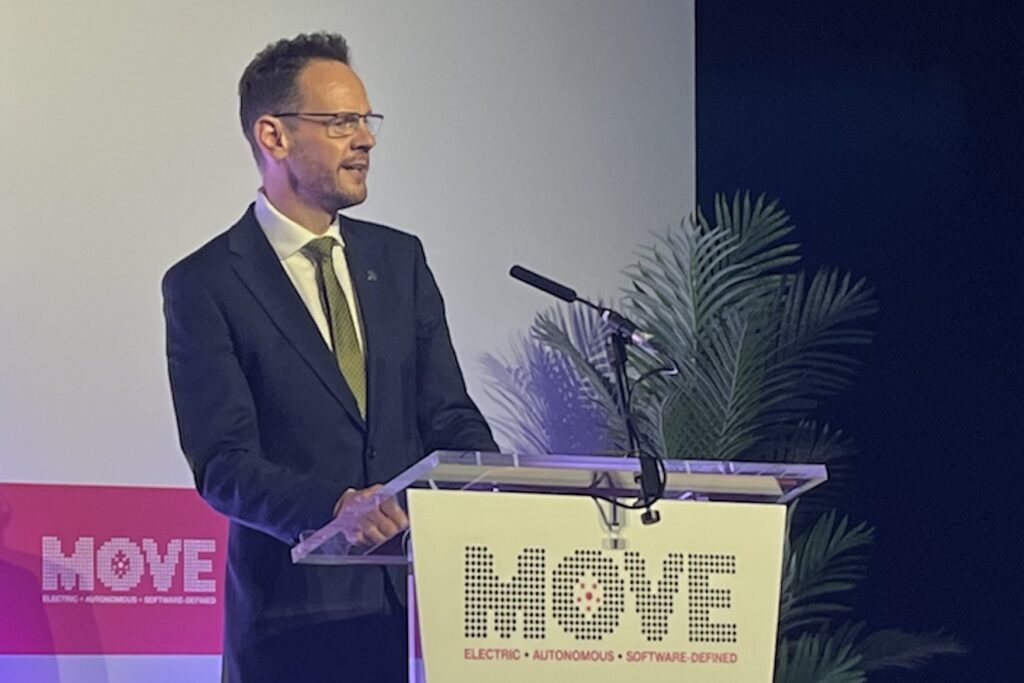
“This government is grasping the opportunity today, making the UK a leader in automated transport,” he said. Ahead of the full rollout of the AV framework in second half of next year, “…operators must prove that their tech is safe, at least as safe as a careful and competent human driver, and continue to prove it.”
Next up, more Stellantis, in a press conference with Bolt announcing a three-way partnership with Pony.ai to “Expand our network of partners to ensure that autonomous mobility in Europe is built on the strongest possible technological and operational foundations.”
We must mention Vivetha Natterjee’s talk on the autonomous vehicle stage, which pulled in more people than some of the keynotes. The Head of Product & Deployment for Autonomous Driving at Bolt was lauded by Lukas Neckermann as “One of the smartest people in the room.”
After lunch, we met up with the FIA, F1’s governing body, who were interested in AV safety and public education.
Autonomy panels
Then, it was panel moderating time. First, “Strategic synergies… why ecosystem-wide collaboration is key for the next wave of AV deployment” with Neha Palmer of Terawatt, Taavi Rõivas, of Auve Tech, Charlotte Eisner, of Bolt, and Eric Dong, of WeRide.
The session was divided into two halves – ecosystem roles and then autonomy standards and interoperability – and started with some audience participation. By show of hands, about 20% of the audience had ridden in an autonomous vehicle in the last 12 months.
We then got into the capabilities AV deployments need to move from pilots to genuine scale, the importance of collaboration, the public transport opportunity, data-sharing and the role of regulators.
Next up, “The liability revolution… re-defining risk for the driverless era” with Nick Reed, of Reed Mobility, Jamie Hodsdon, of Waymo, and Tom Leggett, of Thatcham Research.
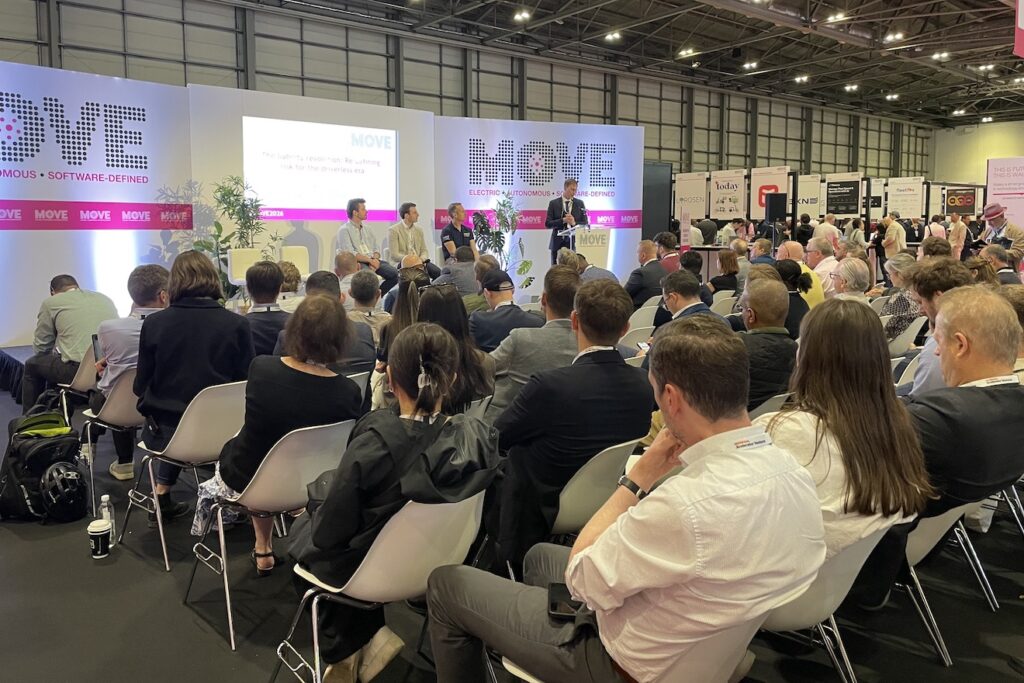
We began with the SAE levels, before swiftly moving on to highway risks that exist today and how autonomy might change things, the assessment of said risks, the AV Act, Waymo’s safety framework, functional safety, perceived safety, and how the disruption of long-established motor insurance verticals might play out over the next 5-10-15 years.
Refreshments, networking and football followed – England’s opening game at the World Cup, a 4-2 win over Croatia. Key takeaway: some of our most promising self-driving players are feeling the heat of government funding delays.
Day 2
The following morning started slowly, but we were soon back up to speed – “The speed of lightness”, in fact, with Mark Tapscott, of British electric sports car manufacturer, Longbow. They’re focussing on revenue per employee, which is apparently around £1.7m for Ferrari, considerably higher than volume brands like Tesla and BYD.
There were more excellent presentations on the AV stage, notably from Michael Lu, Head of Autonomous Driving Safety and Validation at Didi, and Hezeng Wei, Head of Overseas AD and ADAS at Nio.
Our inaugural self-driving consumer champion, Rebecca Posner, then of CCAV, now the Research Institute for Disabled Consumers (RiDC), moderated a well-attended session on scenario-based testing, trust and regulatory acceptance, featuring Jamie Wilson of Alexander Dennis, John Birtwistle of First Bus, and Gemma Schroeder, of the Greater Cambridge Partnership.
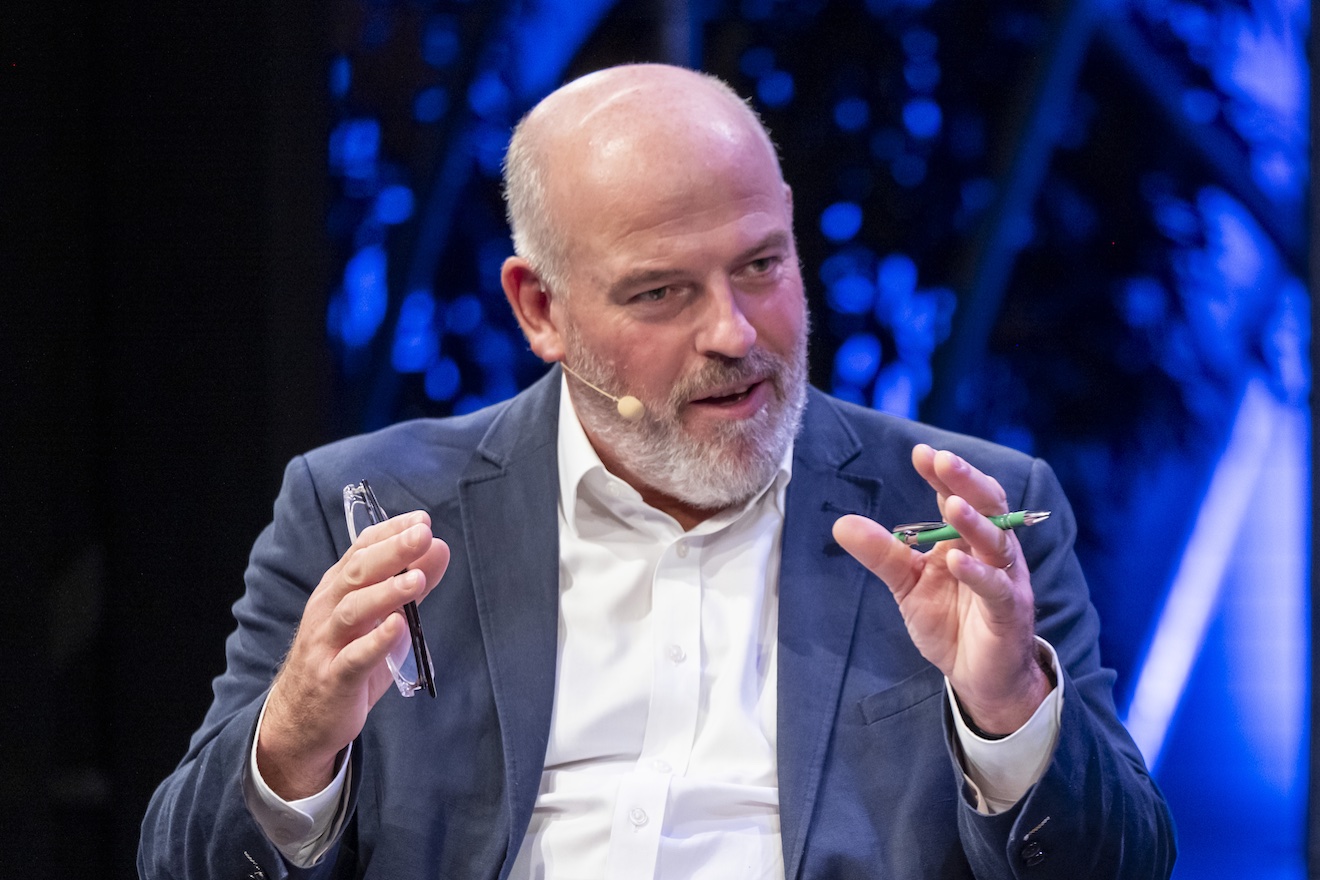
Yours truly then moderated a panel on “AI at the core… end-to-end machine learning for real-time decision making” with Dr Donghwan Shin, of University of Sheffield, Dr Arwed Schmidt, of EasyMile, Dr Nick Reed, of Reed Mobility, and Klaas Nelissen PhD, of Segments.ai by Uber. Four doctors!
Starting with the sometimes strange behaviours of self-driving cars – their tendency to perform brilliantly in highly complex situations but then fail at surprisingly simple things – we delved into ways to test trustworthiness, the implications of a watershed market shift from perception to E-E AI, and the pretty robust safety cases for the current generation of industrial Level 4 vehicles.
Nelissen then got technical, using his background in multi-sensor labelling to explain some of the trade-offs between modular approaches and the evolving ML models, before we finished with surging data needs, the challenges for regulators in evaluating the safety of ML systems, and the question of whether we will always need a human in the loop.
Phew, what an event! In terms of ride quality, those in the know say Waymo still offers the smoothest self-driving, but others are catching up.
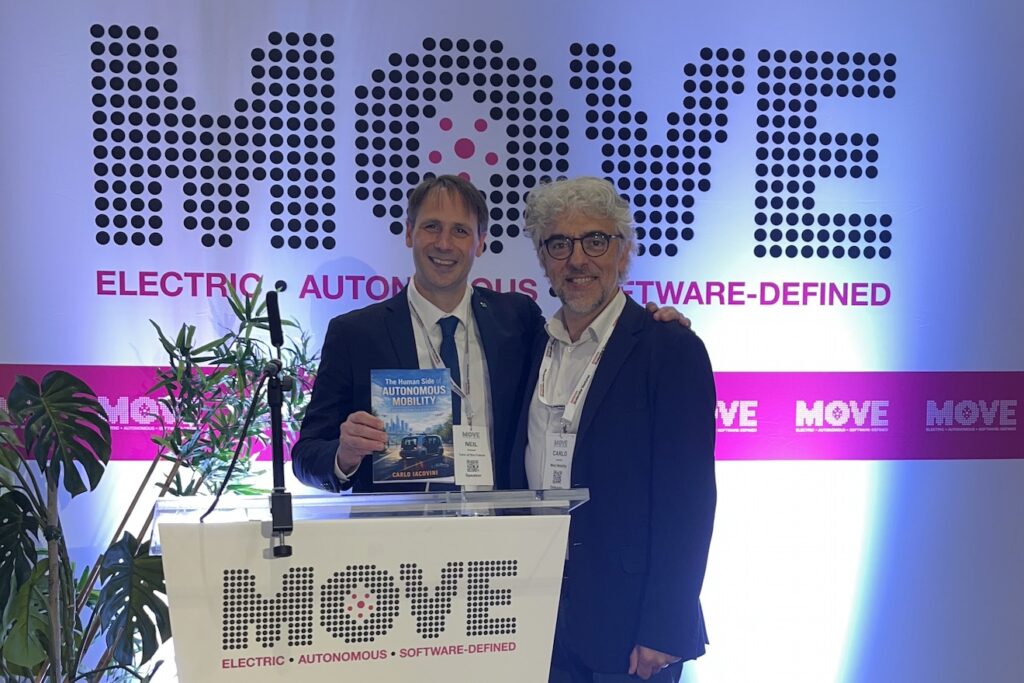
Thanks to Ken for the tech help on the AV stage, and to Carlo Iacovini for gifting us a copy of his book, The Human Side Of Autonomous Mobility – perfect summer holiday reading!