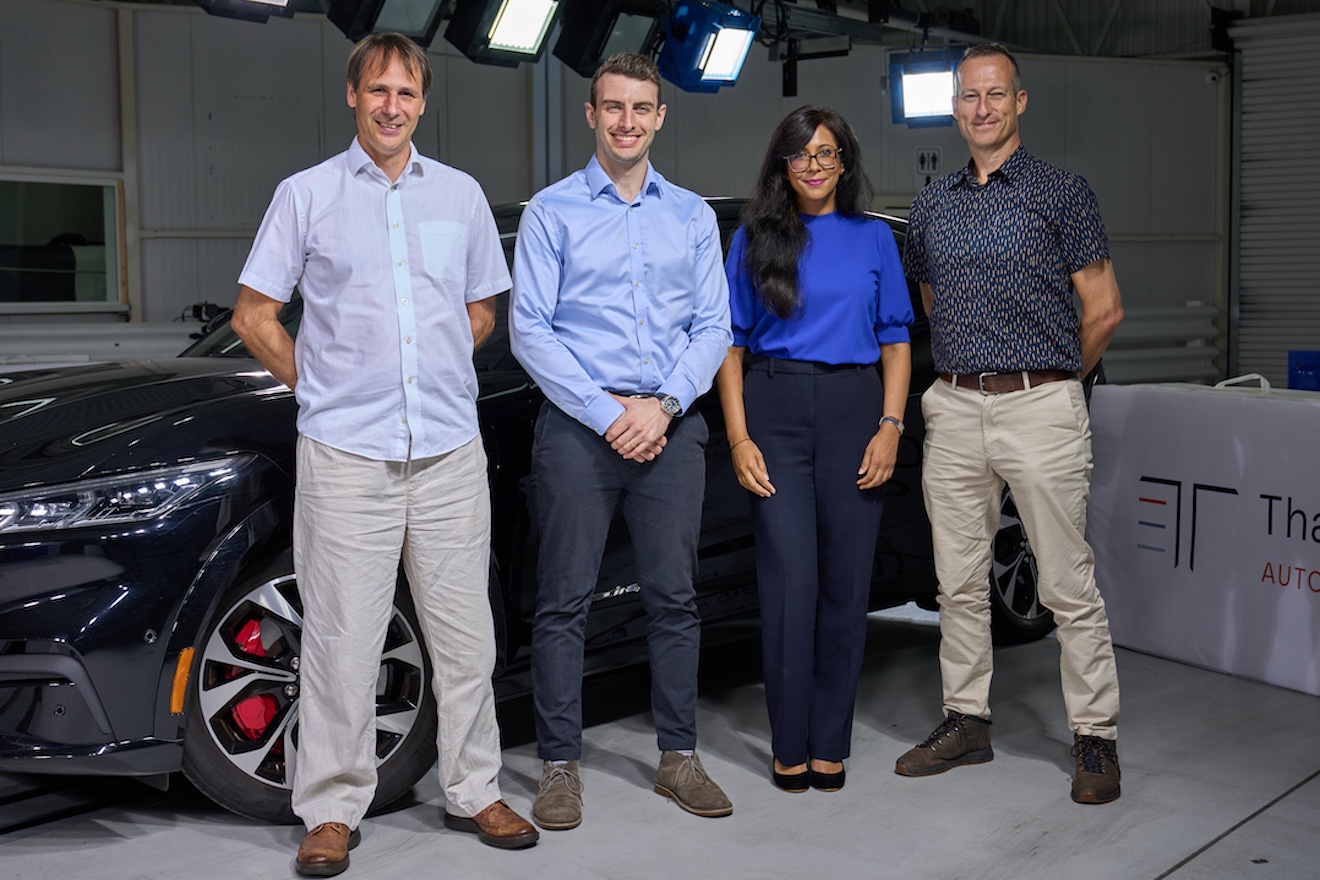
Welcome to Part II of our Thatcham Research hands-free assisted driving experience. On Tuesday 11 August 2026, we accompanied independent road safety campaigner Meera Naran MBE, and mobility expert Dr Nick Reed, on a trip to the UK’s leading automotive risk intelligence organisation.
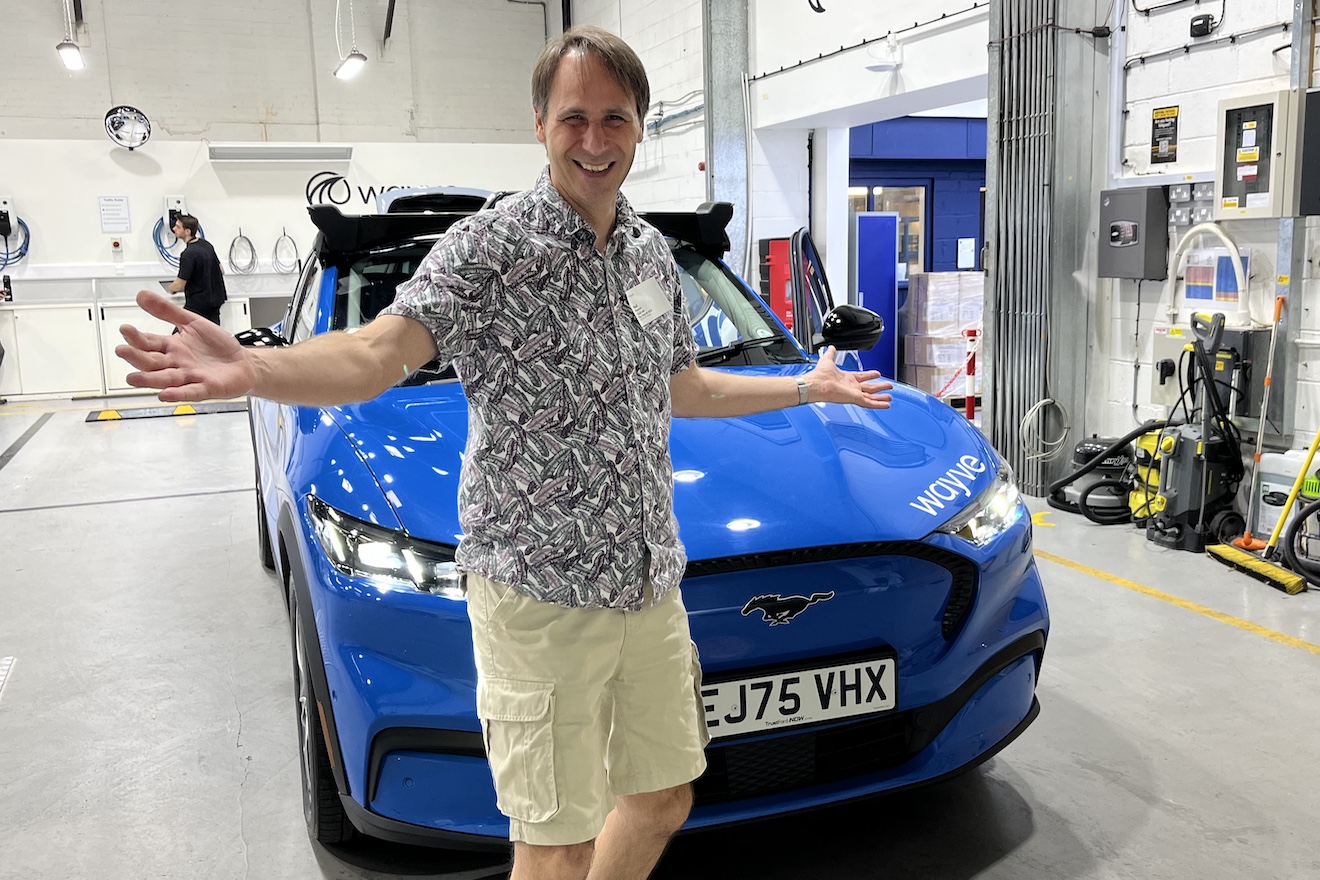
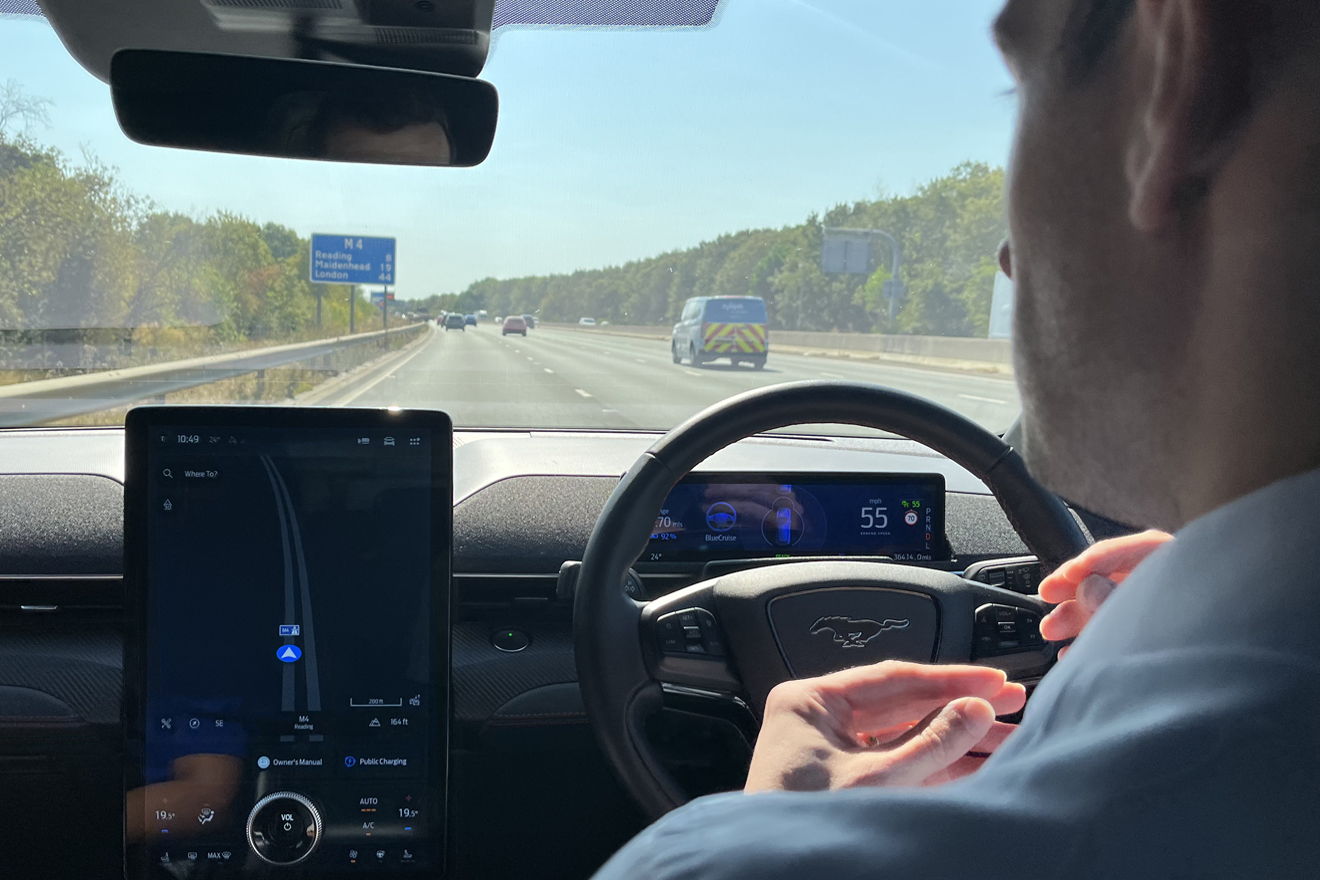
Our host was Tom Leggett, vehicle technology & research manager at Thatcham Research, who first let us experience some cutting-edge Advanced Driver Assistance Systems (ADAS) – see Part I: Hands-free in a Ford Mach-E and BMW iX3.
That was great. However, the best was still to come – a roundtable covering lifesaving assisted driving technologies, standards, data access, consumer messaging and more.
For essential background, Naran’s young son, Dev, was killed in a collision with a lorry on a smart motorway in 2018. A profoundly tragic and avoidable event. She has been lobbying ever since for Dev’s Law – the mandatory fitting of Autonomous Emergency Braking (AEB) and other assisted driving technologies in all new vehicles.
Earlier this year, the Department for Transport (DfT) gave the green light to legislation mandating them in GB Type Approval. A huge win for road safety. Her mission now is, in her words, “To ask the difficult but necessary questions needed to support the government in getting this right.”
Dr Nick Reed of Reed Mobility is one of the most respected voices in UK road safety. The winner of our inaugural Self-Driving Industry Award for Research back in 2023, he provided key evidence for what became the EU’s General Safety Regulation 2 (GSR2) – a Type Approval requirement for all new cars, vans, trucks and buses sold in Europe to be fitted with systems that help reduce collision risk and severity.
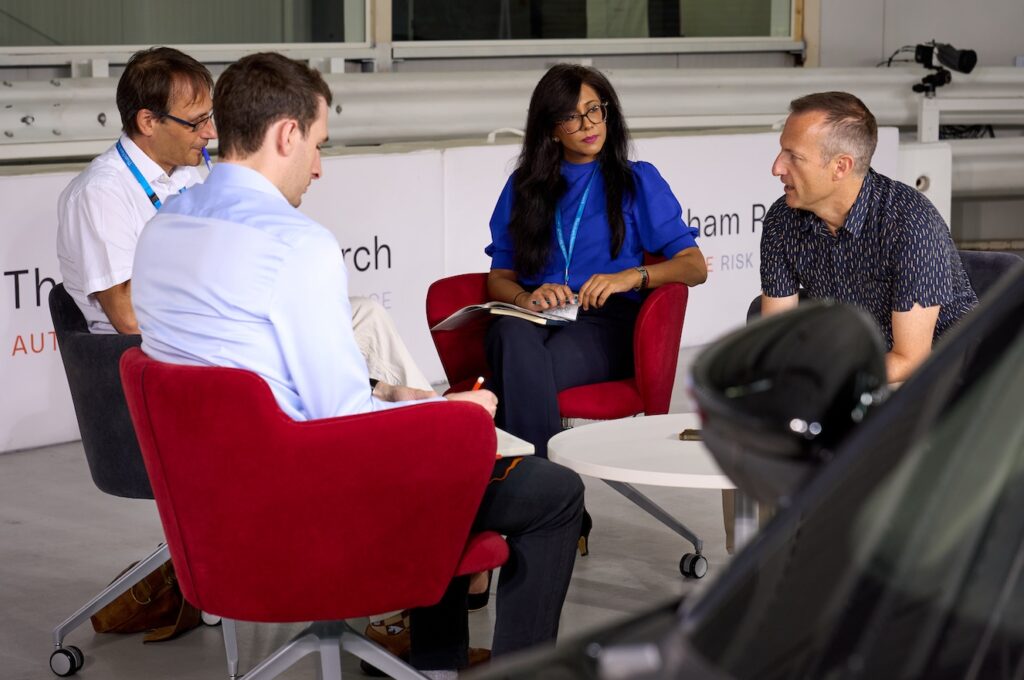
Before continuing, we should clarify that both cars use cameras and radar, and that Naran politely declined the offer to drive the Ford hands-free (understandably, given the smart motorway setting). She was an attentive passenger – carefully observing, preparing pertinent questions. The discussion naturally started with a review of the morning’s events…
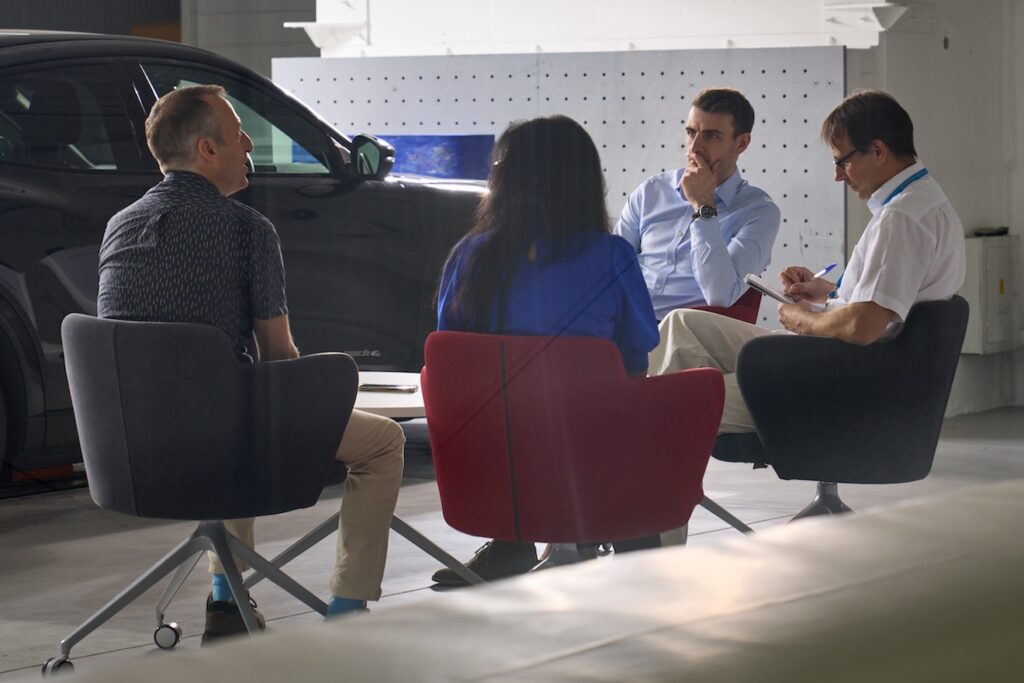
Thatcham road safety roundtable
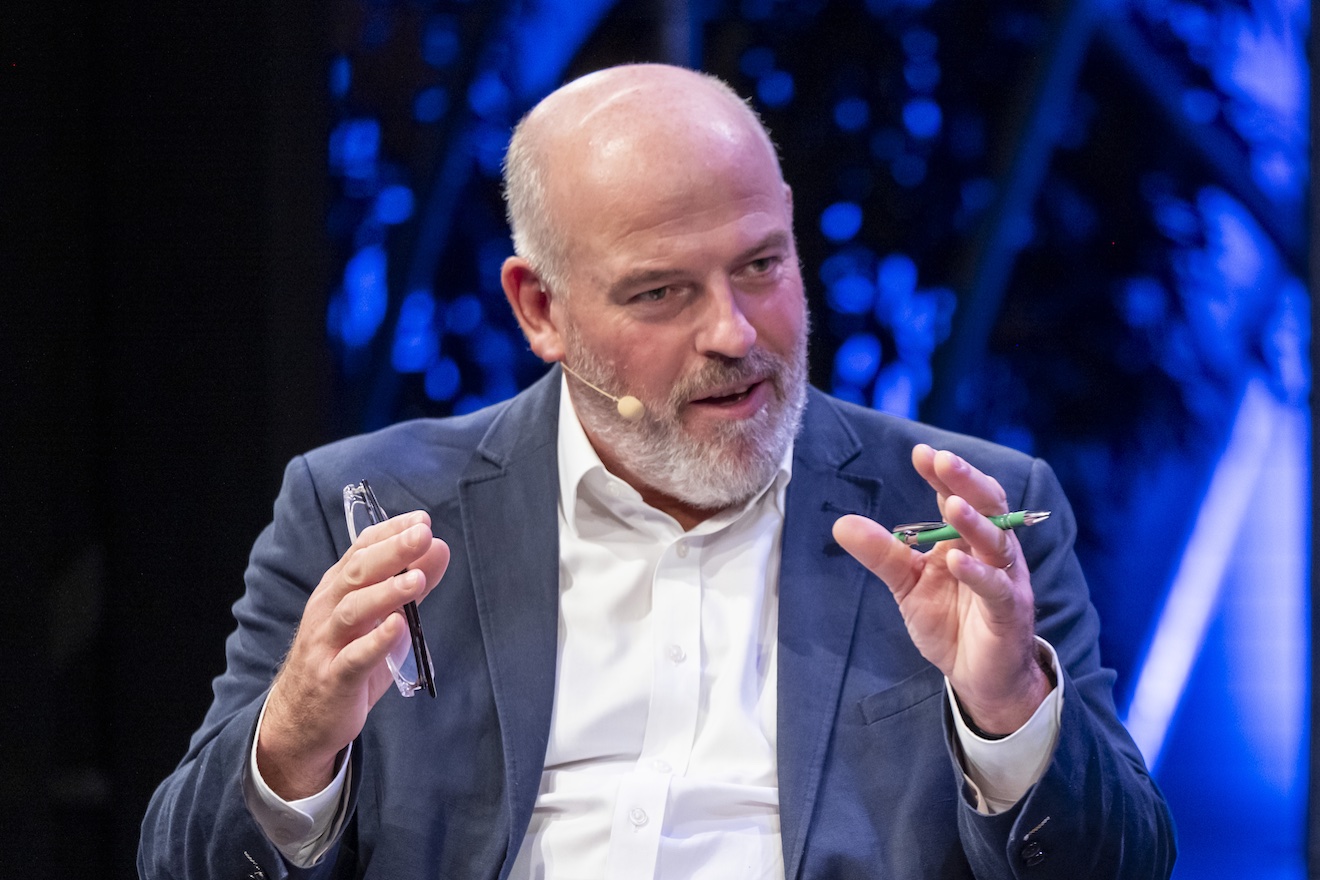
NR: The BMW has come on a step compared to the Ford. I was struck by how thoughtfully multiple systems worked together to provide cooperative protection for the driver and other road users. Monitoring, guidance and alerts were perceptible but not intrusive. There were occasions when both cars behaved differently from what I expected, and the way it’s presented on-screen in the BMW is very different to the Ford. Perhaps the iconography could be standardised. Do I think these technologies can make an important contribution to reducing deaths and serious injuries on our roads? Yes. Would I want them on my own car? Based on my experience today, absolutely.
MN: For me, the rides this morning were unremarkable, 100% what I was expecting. Considering my circumstances are different to most people’s, especially on a smart motorway, I’d say the trust was equal to being in a normal car. It still felt very dependent on the human. The interactivity between different GSR2 elements was smooth and the ride was very comfortable, in sharp contrast to the debate around it, which often feels so clunky. The DfT are proposing to add 18 mandatory safety technologies under Dev’s Law. It’s a technical conversation now. We need a multidisciplinary team to support the government in developing a robust and effective legislative framework modelled to the AV Act.
Quantifiable risk versus perception of risk
TL: Thatcham Research provides its own Vehicle Risk Rating for the UK insurance market. We are not-for-profit, that’s our superpower. We rate every car for safety, security and sustainable repair, and put that information out there for the benefit of all. At the moment, we think ADAS is broadly providing a positive benefit to all road users. We conducted a survey which found that 82% of UK drivers feel safer with it, but we can’t just presume it’s having this transformational impact. We’re aiming to quantify the value of each new technology to insurers in pounds and pence, to really drive change.
MN: I’ve had an experience in a Tesla where the driver thinks they’ve got a self-driving car and they haven’t. They were overconfident in the technology. I feel that all of us here are people who wait in queues. Some people don’t. There have also been surveys showing that drivers can be irritated by ADAS. The most important consideration is the net benefit in terms of reduced KSIs (killed or seriously injured) delivered by a full GSR2 package. We need to establish how statistically significant that benefit is compared to deploying only the highest impact systems, such as AEB. These are conversations we should be having using a multisector approach, grounded in evidence rather than perception.
NR: We hear a lot anecdotally about false positives – my car braked harshly and there was nothing there – but how does that compare to having no ADAS at all? It’s hard for the average driver to notice when every journey has been made, say, 1% safer, compared to the odd occasion where something peculiar happens and they think “This system is awful!” Maybe they don’t even notice when it intervenes to prevent a collision, or they might take the credit and think “I did really well there!”
Access to data
TL: My colleagues hired some Teslas with the Full Self-Driving (FSD) package in America last year, and they were blown away by it, having been long-term sceptics. The number of human interventions was fewer compared to the BMW we drove this morning, although that is based on a very small dataset. The costs of researching this are prohibitive. MIT have done a lot of insightful work in the US, but we can’t automatically translate that to the UK. Our roads are different. Our learning behaviour is different.
MN: Every time I get in my Nissan, it asks: ‘Are you okay for me to collect your data?’, so they are collecting UK data. We need it too. There are parallels with initiatives that enable data to be shared securely across organisations. A similar approach should support road safety investigations. If that ongoing feedback loop between data, investigation and action is not in place, that would be hugely concerning.
NR: How are we supposed to analyse anything without the vehicle manufacturer data? At very least, they could provide anonymised analysis. With the AI tools we have now, the analysis is becoming almost trivial. Getting hold of the data is the tricky part.
Potential hands-free pitfalls
TL: There’s a lot to think about. What systems does the car have? Are they turned on? Is it geo-locked or behind a paywall? Then performance, both in ideal and less-than-ideal conditions. What if, in 10 years’ time, everyone’s gone hands-off and suddenly KSIs are going back up again? Performance degrading over time is another concern. We also need to ensure that approved repairers – both franchised dealers and independent repair shops – are able to work on this stuff.
MN: Have you heard of Beauchamp and Childress? They wrote Principles of Biomedical Ethics, one of the most widely used texts in healthcare ethics. They emphasise the principle of doing no harm. Viewed through that lens, there is a legitimate question about the consequences of inaction. Delaying the implementation of GSR2 may be justified if there is a clear evidence-based reason, but doing nothing long-term brings its own risks. There is a danger we go into analysis paralysis here.
NR: One aspect I feel quite confident about is driver monitoring. That should give us early insights into whether the behaviours people adopt are those that promote safer driving. If not, there are levers that can be pulled that would require manufacturers to change the functionality, to course correct. We can’t let up, but there are protections in place to prevent unforeseen negative outcomes.
Smart motorway lessons
TL: I have to ask Meera, given it is such a significant case study, are there lessons for hands-free driving that we can learn from the smart motorways experience?
MN: Yes. The name. Calling it ‘smart’ was a misstep and, in terms of public education, there was none. It shows what can happen if you fail to tell the public what’s happening. Equally important is the role of data. How can we identify issues, such as vehicles misreading signs, if there is no effective mechanism for sharing information between manufacturers and other stakeholders? One of the first things I proposed was updating the Highway Code, because public education is fundamental. That brings me back to my question today: how do we reach the widest possible audience. Ultimately, it requires a multidisciplinary approach. Manufacturers, policymakers, researchers, educators and others all have a role to play.
NR: If we can encourage the car manufacturers to do that – because they’ve fitted safe technology that’s well implemented, that people enjoy using – that’s a win for them. It is also notable how these assisted and automated driving systems have been largely developed without input from the infrastructure providers. On our rides this morning, it was interesting to see how well the systems coped without any help from infrastructure. It doesn’t feel like it would be hard to broadcast helpful information like speed limits and lane limitations.
Assisted not automated
TL: The Thatcham position is we prefer not to talk about SAE levels. It is either assisted or automated, and then, under the AV Act, user-in-charge (UIC) or no-user-in-charge (NUIC). A lot of people use autonomous and automated interchangeably, but in insurance ‘autonomous’ is increasingly used to describe a system being tested, while ‘automated’ is taken to mean it has been approved.
MN: This morning I felt safer in both cars with the systems on. If I knew other cars had them too, I think I’d feel even safer. We urgently need some public education around this because, to your layperson, how is that not a self-driving car?
TL: Unfortunately, we do see this in the media. We need to explain it, to make sure people know that the car is not driving itself; it’s supporting you doing the driving. I worry that people will think the car is driving itself, and therefore think they can pay less attention.
MN: That’s as well as I’ve ever heard anyone put it. Nutshelled! Let’s start with what it’s not. Is it self-driving? No, it isn’t.