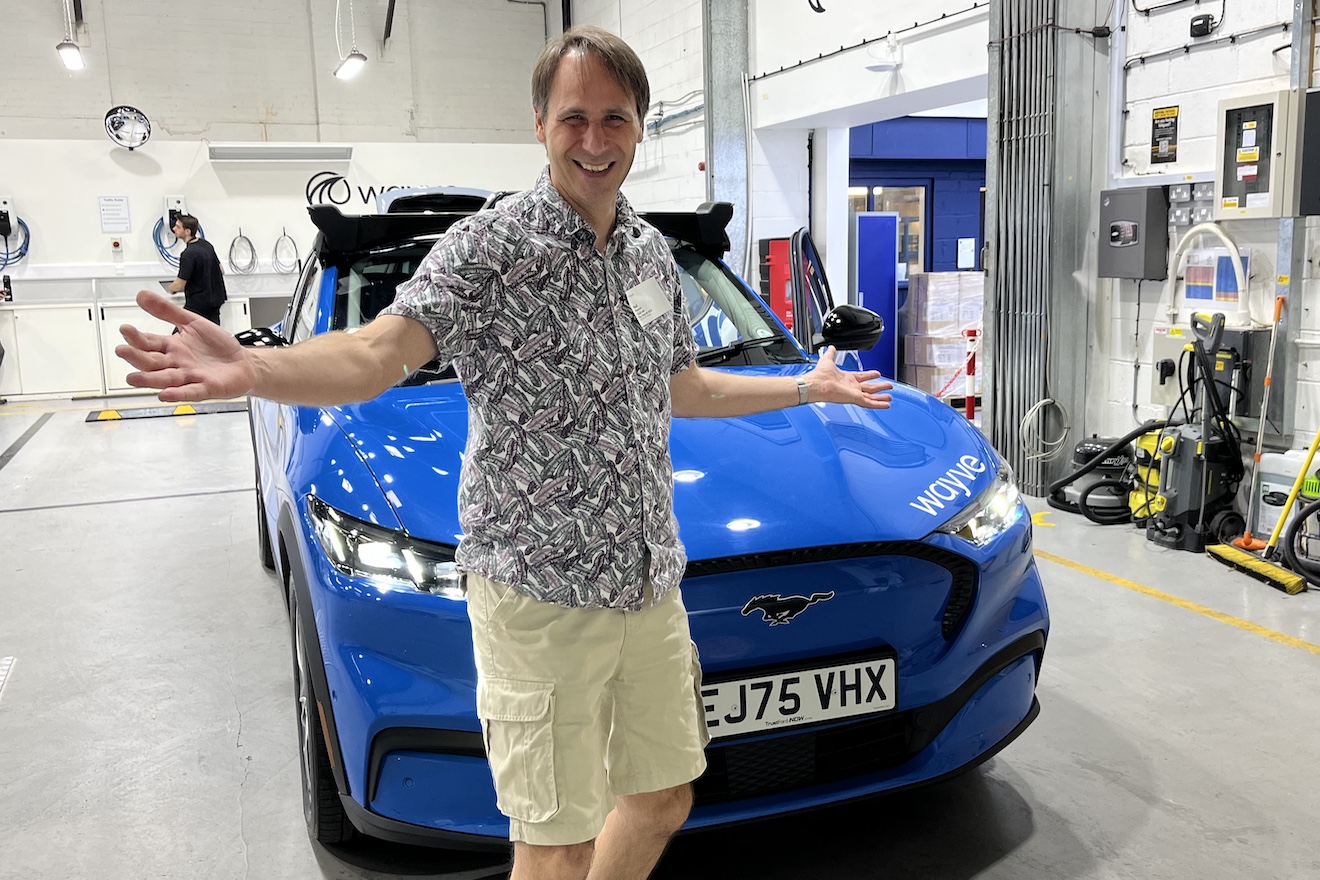
Another important UK self-driving milestone was reached this week with Transport for London granting Wayve private hire vehicle (PHV) licences for 15 of its all-electric Ford Mustang Mach-E robotaxis. Is vision-only technology really good enough to take paying passengers in the capital, even with a safety driver on-board? We took a test ride to find out.
Capsule review: pretty mind-blowing – safe, smooth, comfortable – easily our most impressive self-driving ride to date. During a 20-minute trip around Zone 1 central London, featuring seriously challenging road infrastructure and mixed traffic (including a funeral cortege), guess how many times safety driver Alan had to intervene? Answer: zero.
Advert for self-driving
We weren’t allowed to film it, which is a shame because the efficient, respectful handling of a three-car hearse and limousine train was an advert for self-driving, and Wayve’s embodied AI in particular.
We slowly followed until a second lane became available, then carefully passed each car in turn before going the other way at some lights. It was a scenario many human drivers would find difficult – exactly the kind of thing sceptics said AVs would never be capable of.
The fact that such a challenge had never previously presented itself during Alan’s time in the job made it all the more impressive. He was poised, ready to intervene if necessary, but confident the technology was up to the task.
The rest of the trip was, dare we say, mundane – not something you can say of every cab ride in London! Apart from the blue light strip at the top of the central console – the autonomous operation indicator – you really wouldn’t know the adapted Mustang EV was self-driving. Pedestrians, cyclists, vans, trucks and buses, tight turns, busy junctions, main roads and narrow streets, all handled with no fuss.
The tech integration is improving too, with the computer hidden away instead of taking up the whole boot. Intriguingly, we discovered that the front-facing radar is there for data collection purposes, and for customers who might want it. It didn’t play an active role in the automated driving decision-making. That was all camera and AI – a strategy we have questioned in the past.
London robotaxi rollout
Since the announcement at London Tech Week, in June, that Uber users in the capital can now specify a preference for an autonomous car, more than 100,000 people have expressed an interest in being early riders.
The Transport for London PHV licence news brings that next phase closer, meaning the Wayve AI Driver-equipped cars have been inspected and meet TfL’s robust policy and safety standards.
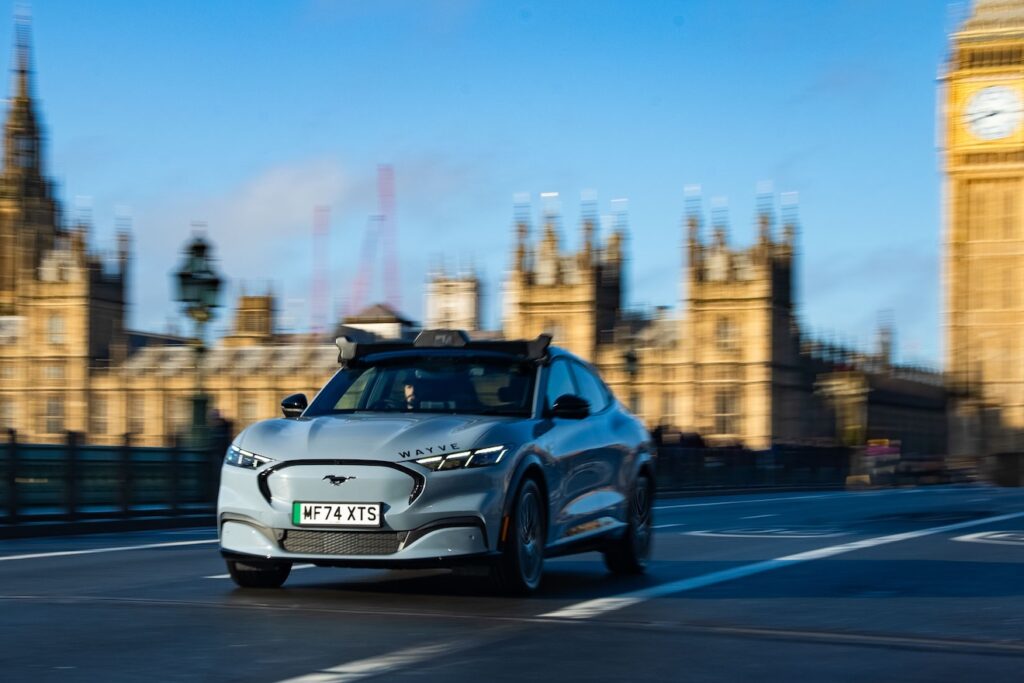
According to yesterday’s press release, “a select number” of Uber users will join the still rather exclusive UK self-driving club “later this summer” as Wayve “fine-tune the experience ahead of the full public launch.”
Sarah Gates, VP Global Affairs & Assurance at Wayve, commented: “This licence is an important step towards giving Londoners the chance to experience autonomous driving technology. The responsible deployment of these vehicles will bring us safer, cleaner and quieter streets, and we’re proud to continue working alongside regulators, communities, and the public as we take the next steps towards making autonomous rides a reality in the capital.”
Annie Duvnjak, Global Head of Autonomous Mobility Operations at Uber, added: “This licence is a key milestone in bringing autonomous rides to London on Uber. Our interest list has seen an incredible response from Londoners who are excited to experience Wayve’s British-built autonomous driving technology.”
Final thought
An excellent IAM RoadSmart event at Thruxton yesterday featured a session by the DocBike Hampshire team – a timely reminder of why the safety aspect is so important. If today’s on-road self-driving experience is anything to go by, the cars of the future are here. Are the great British public ready? It looks like Wayve will be the first to find out… and soon.