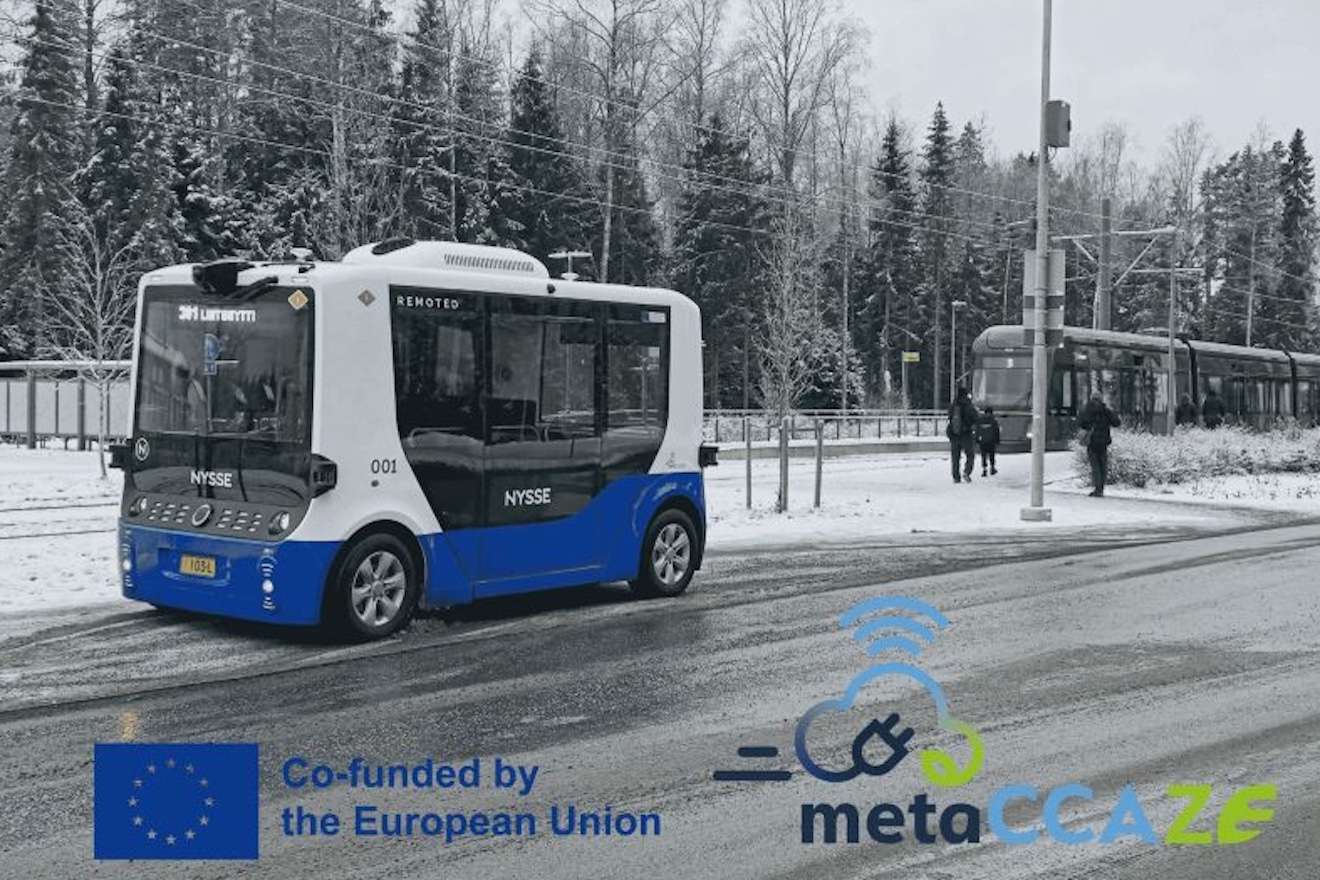

Editor’s comment: “In this guest column, AV expert Andreas Mavroudis, formerly of Aviva and more recently Oxa, urges policy intervention to ensure the many benefits of automated vehicles are delivered nationwide, not just in our big cities.”
Mind the autonomy gap: Why Britain’s AV revolution needs a policy course correction
For more than a decade, autonomous vehicles have been sold as a kind of mobility utopia. The pitch is now deeply familiar: safer roads, cleaner cities, fewer accidents, less congestion, and reclaimed hours once lost behind the wheel.
But beneath the technological spectacle sits an even more seductive promise, that autonomy could help solve one of modern Britain’s quietest crises, isolation.
For older people who can no longer drive, disabled passengers failed by inconsistent transport links, or residents of towns and villages cut off from reliable public services, AVs are presented as liberation machines. A future where transport arrives on demand, distance matters less, and mobility becomes frictionless.
Yet as autonomous systems move from pilot schemes into real-world deployment, another future is beginning to emerge, one far less egalitarian than the glossy presentations suggest. The autonomous revolution may not erase mobility inequality in the UK. It may actually deepen it.
The early signs are already visible. Across the world, robotaxi trials and autonomous transport services are clustering overwhelmingly in dense, wealthy urban centres. Obviously in places where short journeys, constant demand, and sophisticated digital infrastructure make the economics work.
In central London, Manchester, or Birmingham, autonomous mobility offers operators a compelling commercial proposition. Vehicles remain in near-continuous circulation, mapping data stays current, and passenger density justifies immense research and operating costs.
However, outside Britain’s major cities, the equation changes dramatically. A fully autonomous transport network depends on far more than artificial intelligence. It requires high-definition mapping, resilient mobile connectivity, real-time data exchange, smart road infrastructure, and consistent road conditions. These are not evenly distributed resources across the UK.
Large parts of rural Britain, like my village, still struggle with patchy mobile coverage and unreliable broadband. Country roads in Cumbria, Cornwall, Norfolk, Northumberland, or rural Wales were not designed for sensor-heavy autonomous navigation. Lane markings fade. Roads narrow unpredictably. Weather conditions vary sharply. Public transport links have already been hollowed out after decades of cuts and declining rural investment.
The industry often frames AVs as a software challenge. In reality, they are an infrastructure challenge… and infrastructure has always followed money!
The economics of exclusion
The uncomfortable truth is that autonomous mobility is being built around density. We all know this already.
From a purely commercial standpoint, there is little incentive for private AV operators to service sparsely populated areas. Why send a £120,000 robotaxi fifteen miles into the countryside for a single fare when the same vehicle could complete six profitable trips in Zone 1?
Algorithms optimise for efficiency. Markets optimise for return. Neither naturally optimises for social cohesion.
This creates what may become one of the defining inequalities of the autonomous age. It’s what I’m calling, the “Autonomy Gap”. A divide between places hyper-served by intelligent transport systems and those effectively abandoned by them.
Even parts of the industry are beginning to acknowledge the danger. Uber recently warned of a potential ‘two-tier transportation system’ in which autonomous mobility becomes concentrated in affluent urban areas while less profitable communities are left behind.
Here in Britain, we’ve seen this pattern before.
Railway rationalisation in the 1960s severed many rural communities from the national transport network. More recently, broadband roll-outs have consistently prioritised cities and affluent suburban areas, leaving rural communities like mine fighting for basic connectivity well into the 2020s.
Public transport austerity has followed a similar trajectory. Since 2010, thousands of bus routes across England have disappeared, disproportionately affecting villages and smaller towns.
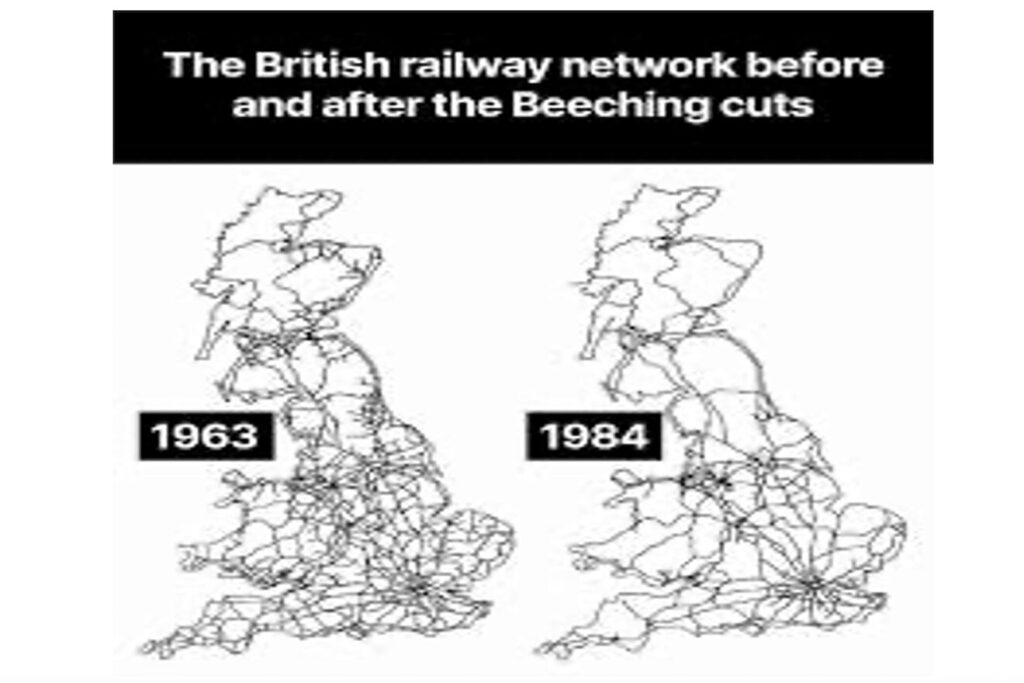
Autonomous mobility risks becoming the next chapter in this story of uneven modernisation.
The danger is not merely inconvenience. It’s compound isolation.
In rural Britain, the car is not simply transport, it’s access to healthcare, employment, education, supermarkets, and social life itself. Remove driving ability through age or disability without providing viable alternatives, and people become geographically stranded.
This is especially significant in a country with an ageing population. Millions of older Britons already experience chronic loneliness, particularly outside urban areas where social services and public transport are weaker. AVs are often marketed as the solution to this demographic challenge.
But if autonomous services remain commercially concentrated in cities, the people who stand to benefit most may once again be left behind. For disabled passengers, mobility is not merely about convenience, but independence.
As Vivienne Francis, Chief Social Change Officer at the Royal National Institute of Blind People (RNIB), warned: “Not being able to get out and about independently has a huge impact on the lives of blind and partially sighted people, from limiting their employment prospects to isolating them from friends. More than half of blind and partially sighted people tell RNIB they want to go out more than they currently do.”
The future of transport could paradoxically reduce mobility for the very groups autonomy was supposed to empower.
When convenience becomes infrastructure
Part of the problem lies in how policymakers currently understand AVs. Too often, autonomy is treated as a consumer technology, another innovation category alongside smartphones or food delivery apps.
The reality is, autonomous transport is closer to railways, electricity grids, or the motorway system than consumer electronics. Once widely deployed, it becomes foundational infrastructure that shapes economic geography itself.
That distinction matters because infrastructure creates momentum. Investment attracts more investment. Businesses relocate towards efficiency. Services cluster around accessibility. Property values rise where friction falls.
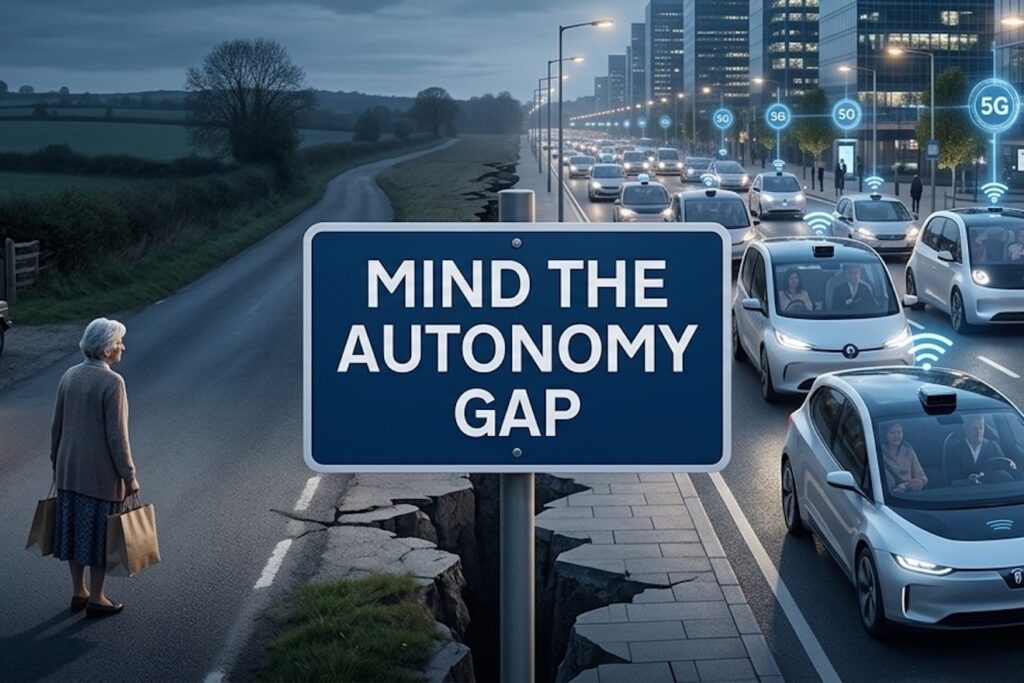
If autonomous transport develops according to pure market logic, the UK’s cities will become increasingly seamless while peripheral communities become progressively harder to access. The result may not be dramatic collapse, but something slower and potentially more corrosive through a gradual erosion of viability.
A village or town with unreliable transport becomes less attractive to employers. Younger residents leave. GP access deteriorates. Schools shrink. Local commerce weakens. Investment disappears. Isolation compounds incrementally until communities become economically invisible. Technology rarely destroys places overnight. It simply redirects opportunity elsewhere.
The myth of neutral technology
There is also a broader ideological problem embedded within the AV debate with the assumption that technology itself is inherently democratising. It is not.
Technology reflects the incentives of the systems deploying it. Social media did not automatically create healthier public discourse. E-commerce did not revitalise every high street. Streaming platforms did not democratise culture as evenly as promised.
Likewise, AVs will not automatically produce equitable mobility outcomes. Without intervention, autonomous systems are likely to mirror existing inequalities with even greater efficiency. Wealthier districts will receive faster service, denser coverage, and lower wait times because their data profiles and spending power make them more commercially attractive. Rural regions risk becoming edge cases in optimisation models.
Academic researchers are already warning that AV deployment could ‘enlarge the existing spatial and social inequity gaps’ unless governments actively intervene in how services are deployed.
The danger is not deliberate exclusion. It is mathematical neglect. And because algorithms appear objective, that neglect can become politically invisible.
A policy framework for mobility equity
If the UK wants autonomy to function as public infrastructure rather than luxury convenience, policymakers will need to intervene early, before market dynamics harden into permanent geography.
That means treating AV deployment not simply as deregulation, but as industrial policy.
One obvious solution would be to tie urban operating licences to rural service obligations.
If private operators want access to lucrative city-centre markets, they should also be required to provide minimum levels of coverage to underserved towns and rural regions. Britain already uses similar principles in telecommunications and utilities. There’s no reason mobility should be exempt.
The government could also introduce something like Universal Mobility Credits, portable subsidies targeted at elderly, disabled, and rural residents. Rather than subsidising operators directly, credits would follow the passenger, allowing users to spend them across competing AV platforms.
This would help transform low-density passengers from commercially unattractive fares into economically viable customers.
Infrastructure ownership will matter too. If mapping systems, vehicle-to-infrastructure networks, and transport data become entirely proprietary, Britain risks handing enormous control over national mobility to a handful of global technology firms.
Certain layers of AV infrastructure should instead be treated as public utilities, like interoperable systems accessible to multiple providers, including councils, community transport operators, and regional co-operatives. Otherwise, autonomy may consolidate not only geographic inequality, but corporate power.
Westminster has largely framed autonomous vehicles through the lens of innovation, safety, and economic competitiveness. Yet far less attention has been paid to the geographic distribution of those benefits, particularly in rural Britain, where transport deprivation is already acute.
The UK’s transport investment model already heavily favours major urban corridors. Without intervention, autonomous mobility risks reinforcing the same imbalance in digital form.
It’s bigger than just transport
Ultimately, the AV debate is not really about cars. It’s about whether advanced technology will reinforce the logic of concentration that already defines modern Britain.
Economic opportunity, venture capital, media, higher education, and digital infrastructure have increasingly clustered around London and a handful of major cities for decades.
Autonomy could accelerate that divide – or help reverse it.
Done well, autonomous mobility could reconnect isolated communities, extend independent living for older citizens, and create entirely new models of flexible rural transport.
Done badly, it could turn mobility itself into another premium service available primarily to those living inside profitable postcodes.
The technology is arriving either way. The real question is whether Britain intends to shape the outcome or simply allow the market to decide which communities remain connected to the future.
My final thought
Technology is never neutral; it follows the path of least resistance and highest profit. If we want the AV revolution to be a ‘cure’ for isolation, we have to engineer that outcome through policy and intent, not just hope.
Disclaimer: Opinions expressed in this column are solely those of the individual contributors.