
Following the successful passing of The Automated Vehicles Act (AV Act) back in 2024, thoughts quickly turned to what was missing – notably detailed guidance on: 1) automated passenger services; 2) safety principles; and 3) misleading marketing.
Pleasingly, the last six weeks has seen significant progress on all three of these key aspects as secondary legislation takes shape.
On 22 May, applications opened for robotaxi and (robo)bus operators looking to join the self-driving vehicles pilot scheme.
On 17 June, the Department for Transport (DfT) launched a consultation on the draft Statement of Safety Principles (SoSP) – something we discussed during The Liability Revolution panel at MOVE 2026.
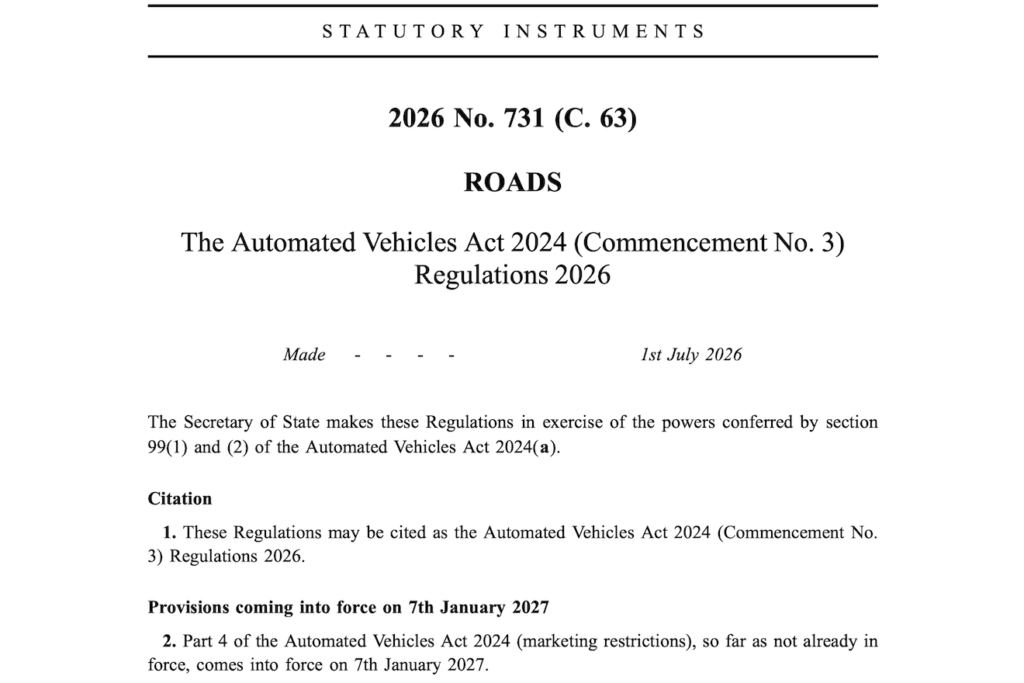
This week, the triumvirate was completed by the confirmation of eight protecting marketing terms for automated vehicles – automated, automated driving, autonomous, autonomous driving, drive autonomously, drive itself, driverless, and self-driving.
Due to come into force on 7 January 2027, we’d be interested to hear Tesla’s thoughts on that last one!
Ministerial AV Comment
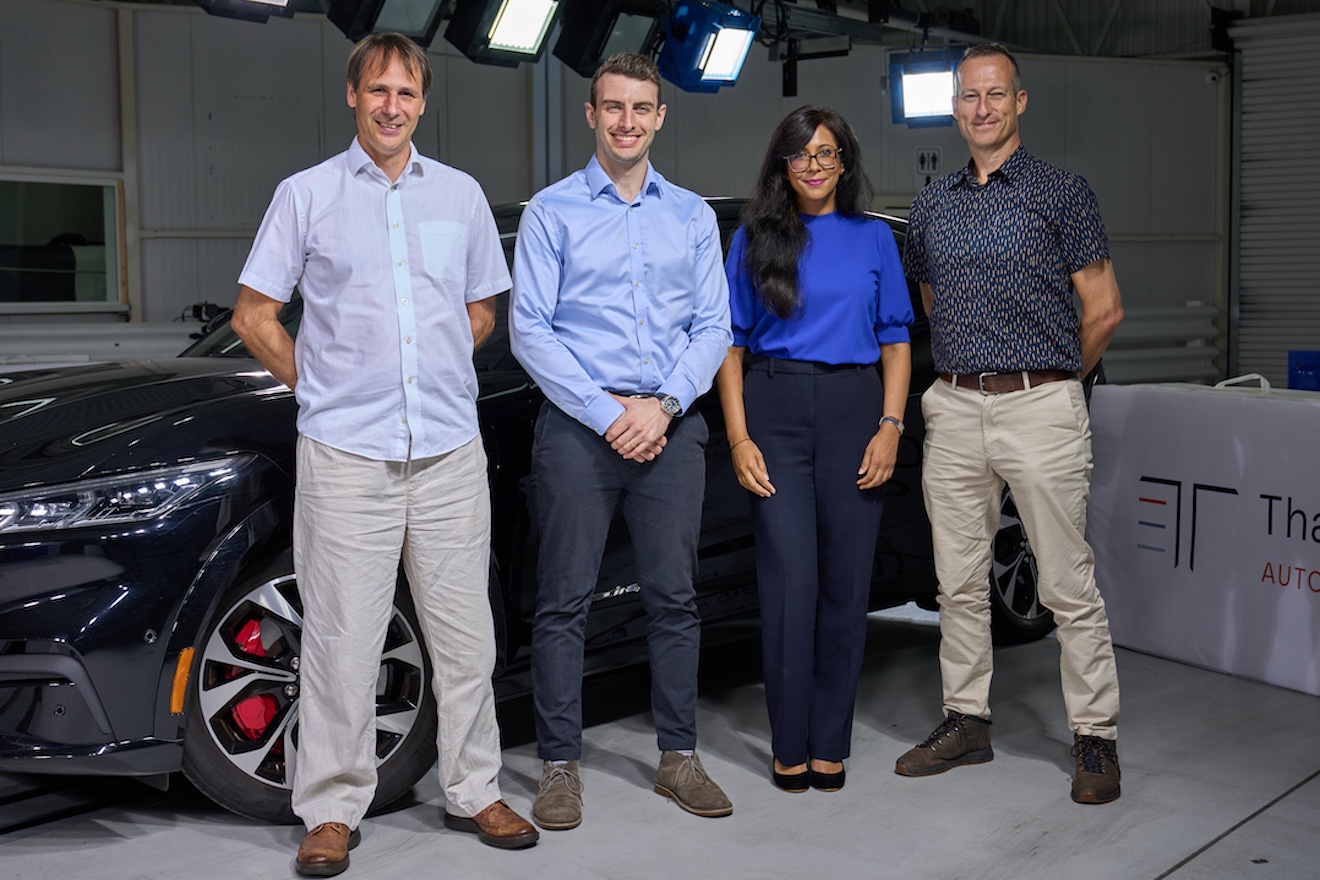
In a written statement, Simon Lightwood, Parliamentary Under-Secretary of State at the DfT (pictured), said: “The purpose of the protecting marketing terms consultation was to identify the words, expressions, symbols or marks that should only be used to describe authorised or listed automated vehicles.
“These regulations will help prevent end-users in Great Britain from being misled into thinking that vehicles that are not authorised automated vehicles can safely and lawfully drive themselves.
“Misleading marketing of automated vehicles is dangerous: it can mislead drivers into thinking that they do not need to pay attention to the road.
“As more manufacturers offer high-end driver assistance systems, misleading marketing risks worsening road safety and could undermine trust and successful adoption of self-driving vehicle technology.”
AV Use in Highway Code
One of the first to comment on the news was Alex Glassbrook, barrister in transport, tech & AI law at Temple Garden Chambers, who pointed us to the statutory instrument in question.
Back in 2023, it was Glassbrook who alerted us to the launch of the government webpage Self-driving vehicles listed for use in Great Britain.
As of today (10 July 2026) there are still none. However, the introductory wording has changed from “A new section of the Highway Code will clarify…” to “A new section of The Highway Code clarifies driver responsibilities and rules on the use of self-driving vehicles.”
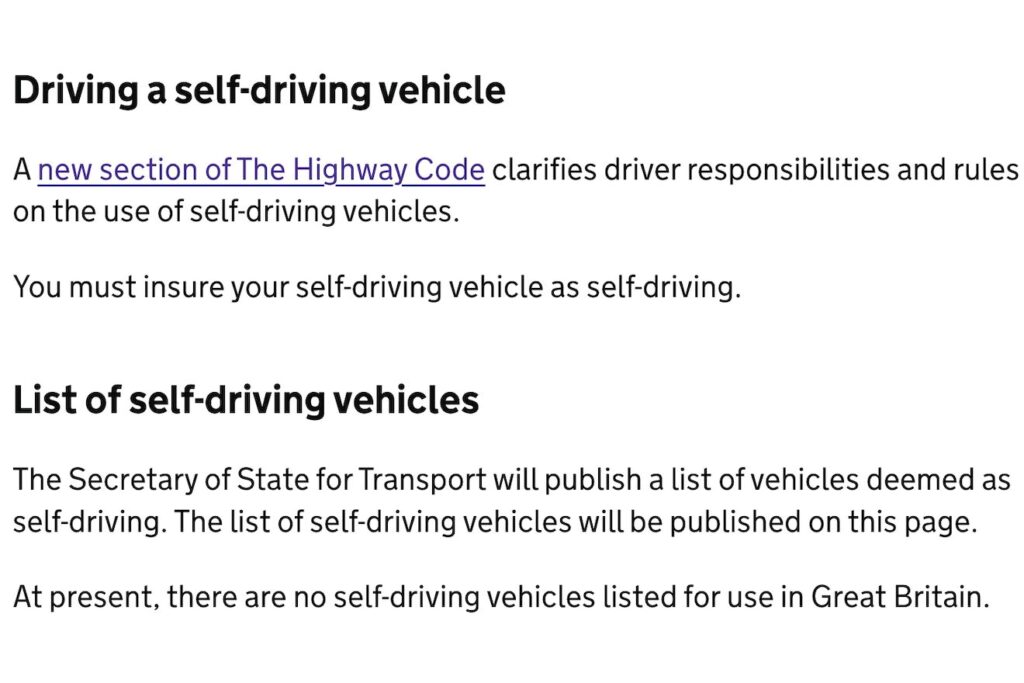
Establishing that self-driving vehicles must be listed as such by the Secretary of State for Transport, as described above, said new Highway Code section says:
“These vehicles are capable of safely driving themselves when the self-driving function is correctly turned on and the driver follows the manufacturer’s instructions. While the vehicle is driving itself, you do not need to monitor it.
“Self-driving vehicles differ from vehicles that are fitted only with assisted driving features (like cruise control and lane-keeping assistance). Assisted driving features can do some of the driving, but the driver still needs to be responsible for driving at all times.
“While a self-driving vehicle is driving itself in a valid situation, you are not responsible for how it drives. You may turn your attention away from the road and you may also view content through the vehicle’s built-in infotainment apparatus, if available.”
It then gets into potential handovers, stating: “If a self-driving vehicle needs to hand control back to the driver, it will give you enough warning to do this safely. You MUST always be able and ready to take control, and do it when the vehicle prompts you.”
And then links the Hierarchy of Road Users – a concept that places those most at risk at the top. This line stands out: “This principle applies most strongly to drivers of large goods and passenger vehicles, vans/minibuses, cars/taxis and motorcycles.”
2026/27
That’s pretty detailed. The technology, so we keep being told, is ready. The regulatory framework is almost there. So, the big question: When will we see the first self-driving vehicle (without a safety driver) operating on UK public roads?