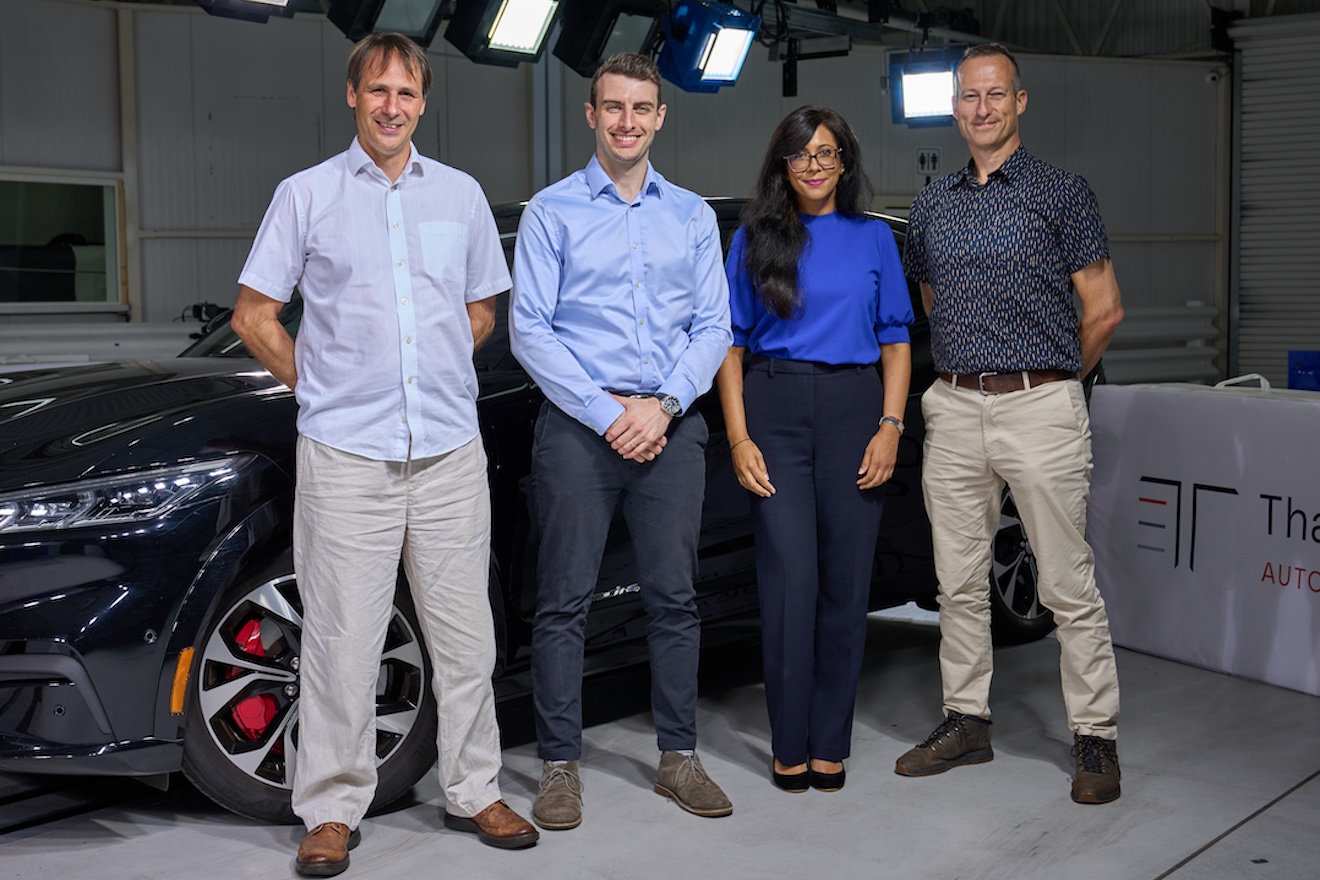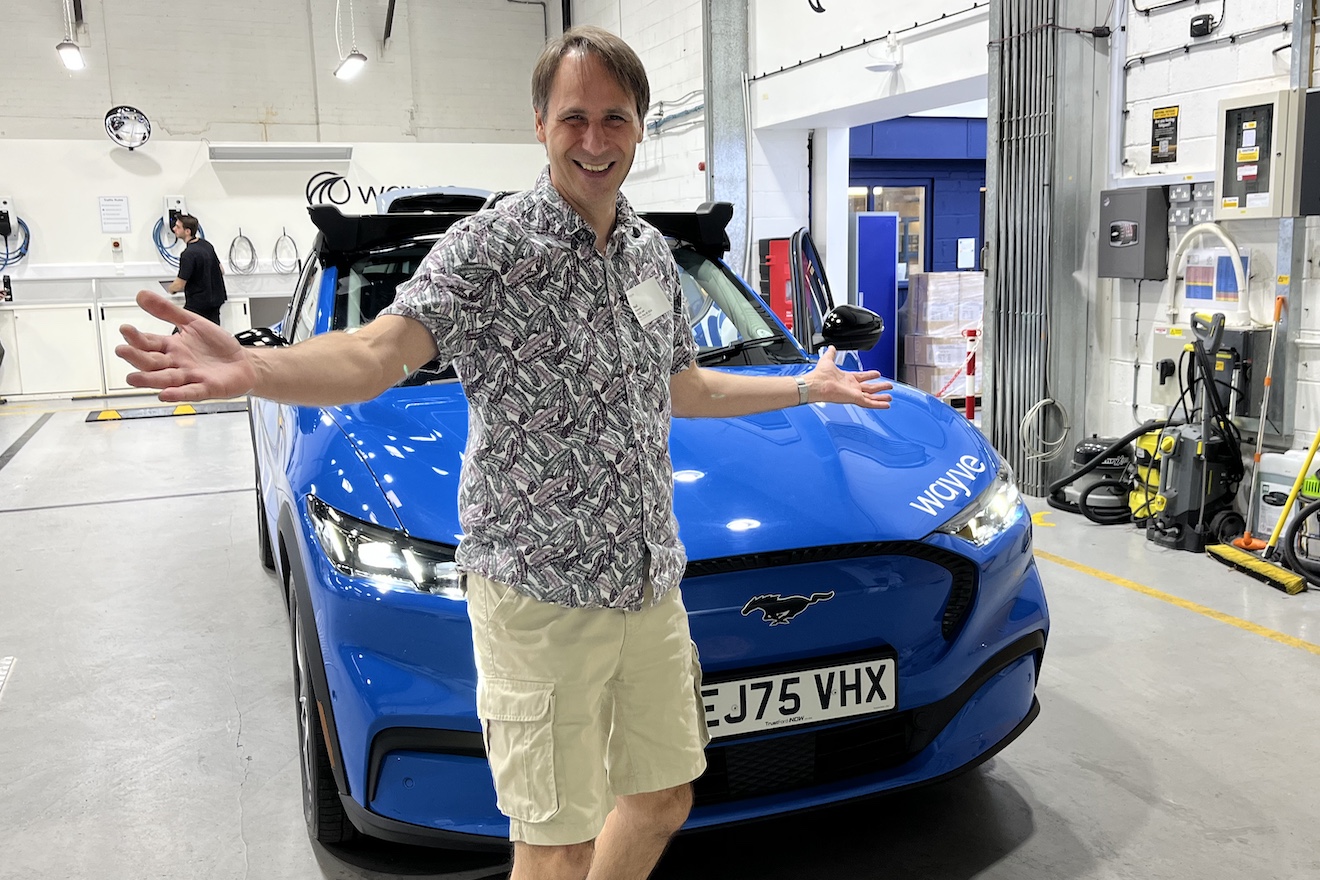
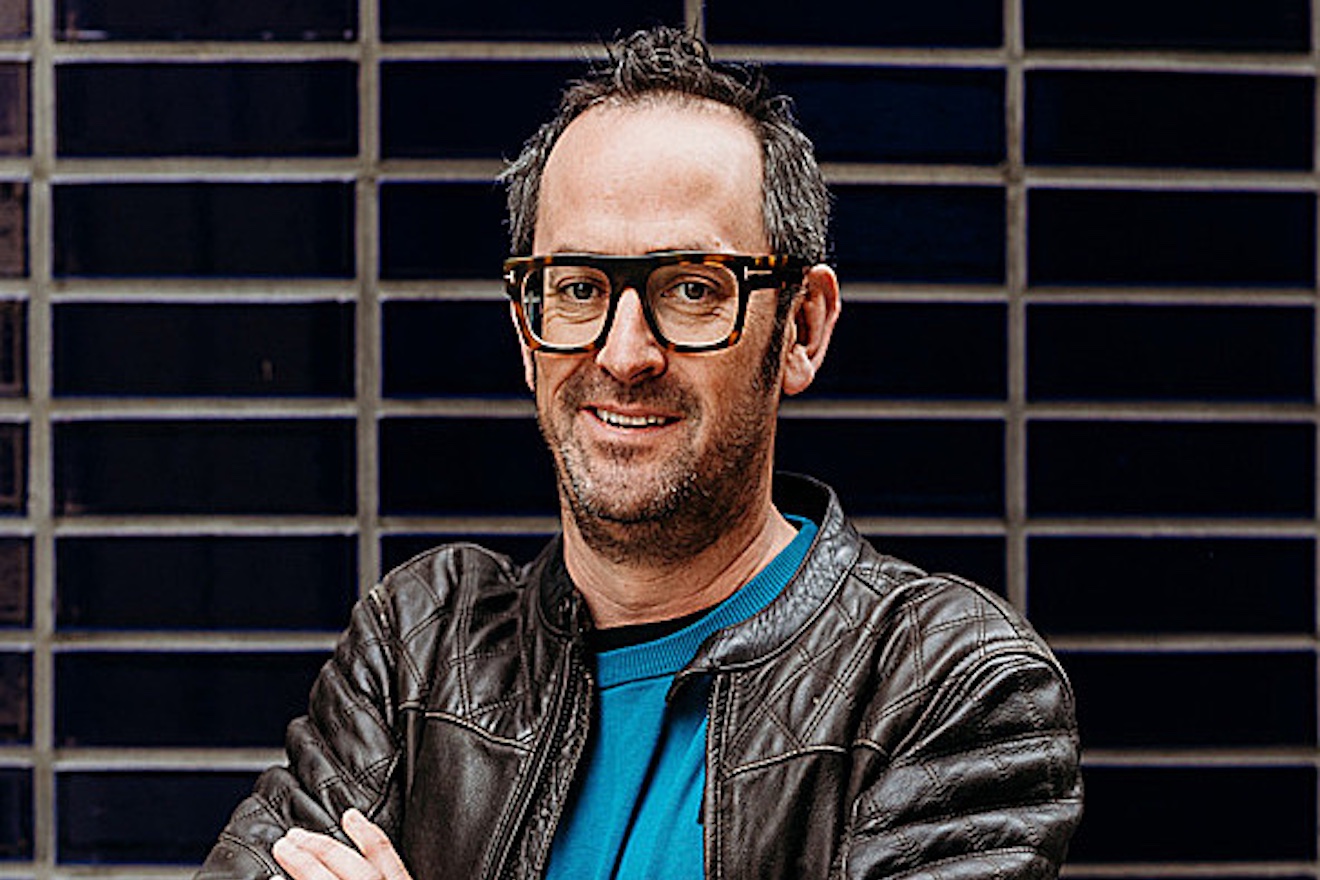
Editor’s comment: “In this guest column, new product consumer research specialist Fergus McVey looks at changing attitudes to connected and automated vehicles (CAVs). Fergus was part of the team which won our Self-Driving Industry Award for Research back in 2024. Now Client Director at Quadrangle, he recently conducted the fifth annual Driving the Future survey on UK attitudes to connected and autonomous vehicles, including our new Cars of the Future questions on first-hand experiences. Here, he explores how opinions have changed since 2019 and suggests where the industry should focus its communication efforts in 2027 and beyond.”
Driving the future: Are UK drivers ready to take a back seat?
Autonomous vehicles are set to redefine the car industry but our detailed survey data, collected over seven years, shows the British public aren’t convinced. The industry has yet to demonstrate its value to the people who matter most – paying customers.
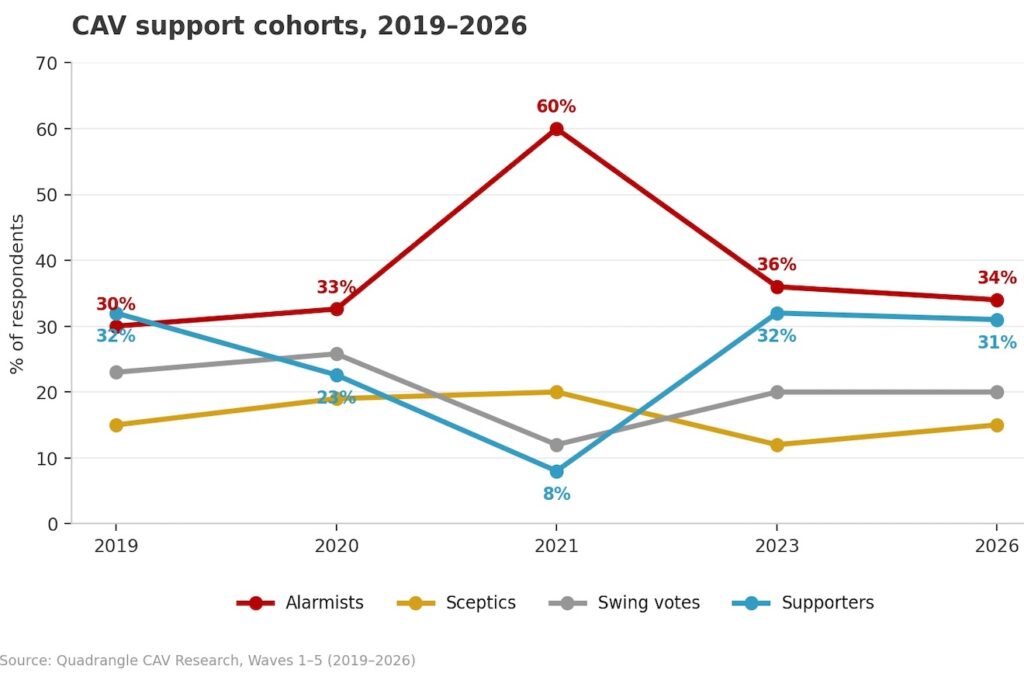
Our 2026 Driving the Future report, wave five of a survey running since 2019, provides a nice usable guide to some of the most striking findings in the data. This year’s headline number tells its own story: 31% “keen support” against 34% “alarm.” The market is divided.
Build it, but they won’t come without good reason
Level 4 and Level 5 autonomy face strong resistance across the board. Our data shows that mass adoption of AVs doesn’t depend on improving availability, or on solving the last few technical issues needed to see off the safety driver. It depends on widespread public acceptance of AVs. Right now, that destination is far from guaranteed.
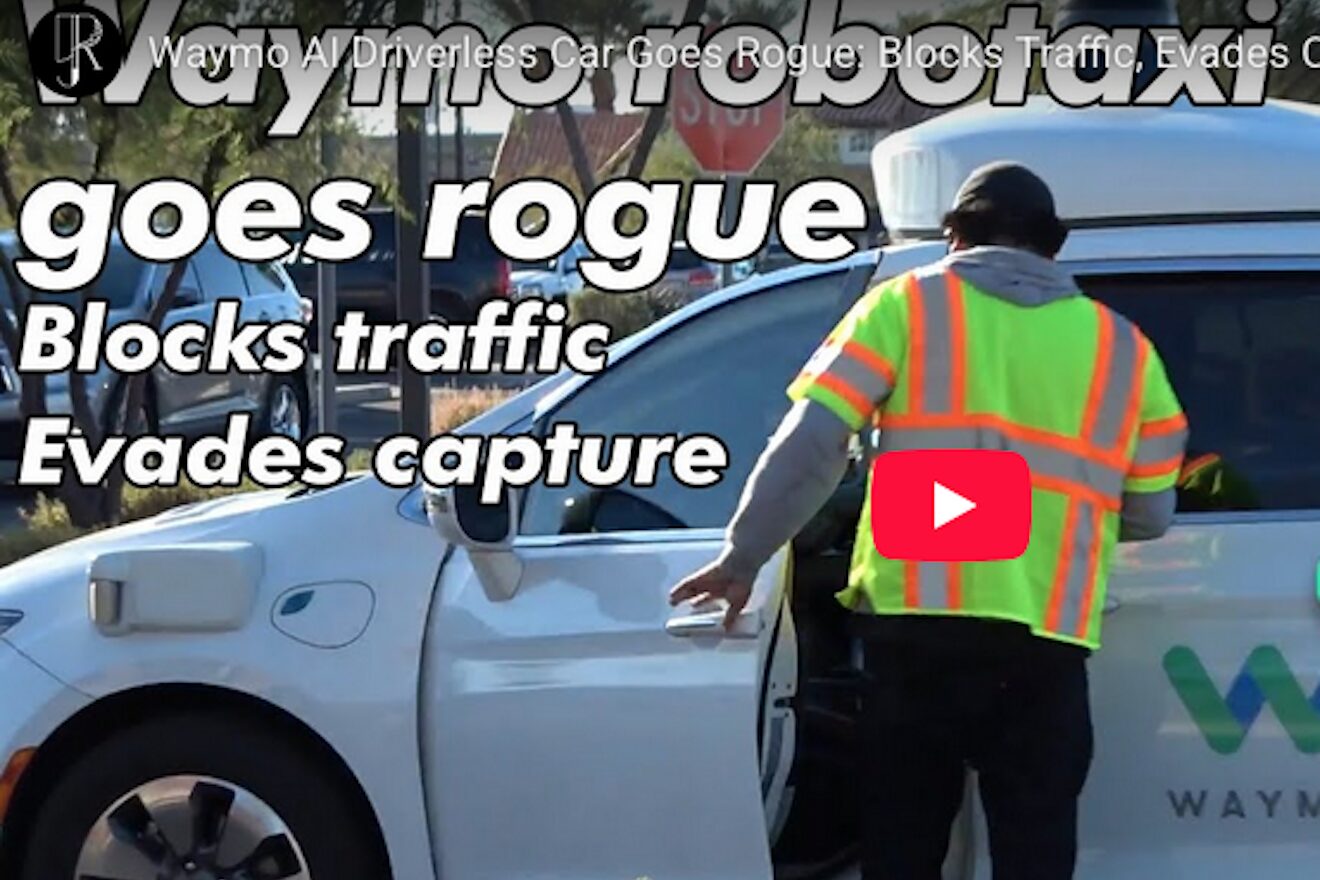
Many people watch their phone or laptop glitch and simply can’t accept a car being driven by “those things”. There’s plenty of anecdotal evidence of first-time robotaxi passengers being extremely nervous, then quickly feeling at ease – describing the system as “one of the best drivers I’ve ever been with.” Does that mean uptake will be swift the moment services launch? In a word: no – just look at EV adoption.
If commercial AVs are to succeed, the industry must first accept it has no innate right to exist. It must prove its value to the people expected to pay for it.
No improvement over half a decade
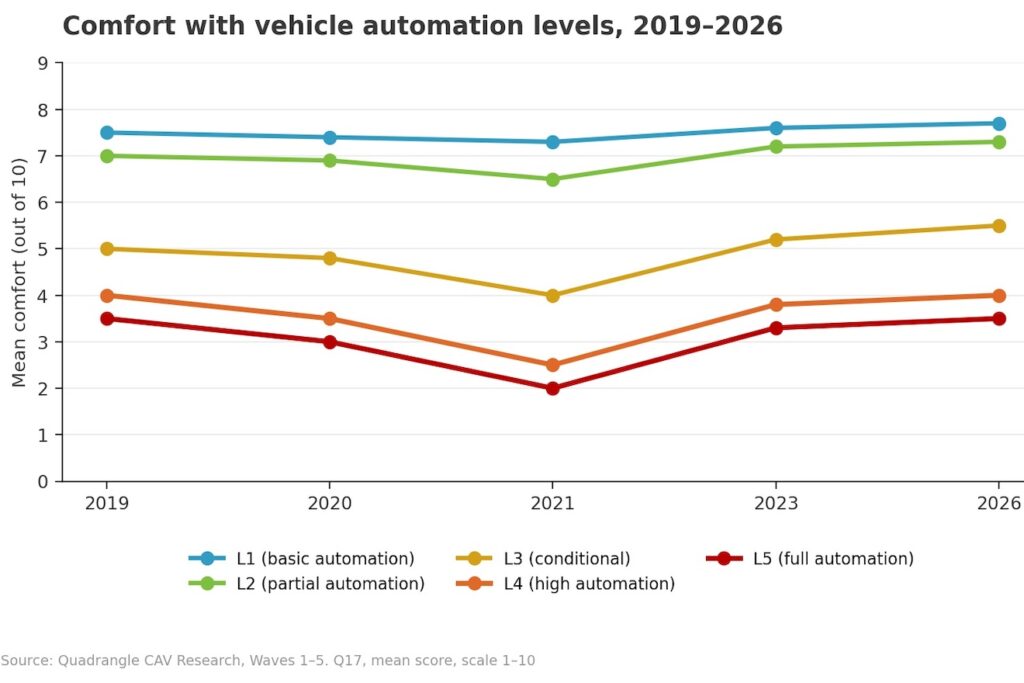
Whilst attitudes to autonomy have improved since Covid, they are, in truth, simply back where they were in 2019. Support for genuinely autonomous vehicles (L4 and L5) remains woefully short of where we, as advisors to OEMs, would recommend launching a product.
None of the public communication work so far has shifted core attitudes. The industry is labouring under the misconception that the clear superiority of autonomous services will drive acceptance.
They may trust their AI friend Claude with the most intimate secrets of their life, but they still worry about large, fast-moving lumps of metal moving around on their own. Whilst this sentiment prevails, every use case and every revenue model built on assumed large-scale public uptake is at risk.
Negativity peaked in 2021, support has reset
Grouping respondents by overall attitude to AVs shows how sharply opinion has swung since Covid. In the 2021 shock, “Alarmists” rose to 60% of the population while “Supporters” collapsed to just 8%. By 2026, the market had reset: Supporters currently sit at 31%, Alarmists at 34%. A genuinely divided public, not a uniformly hostile one.
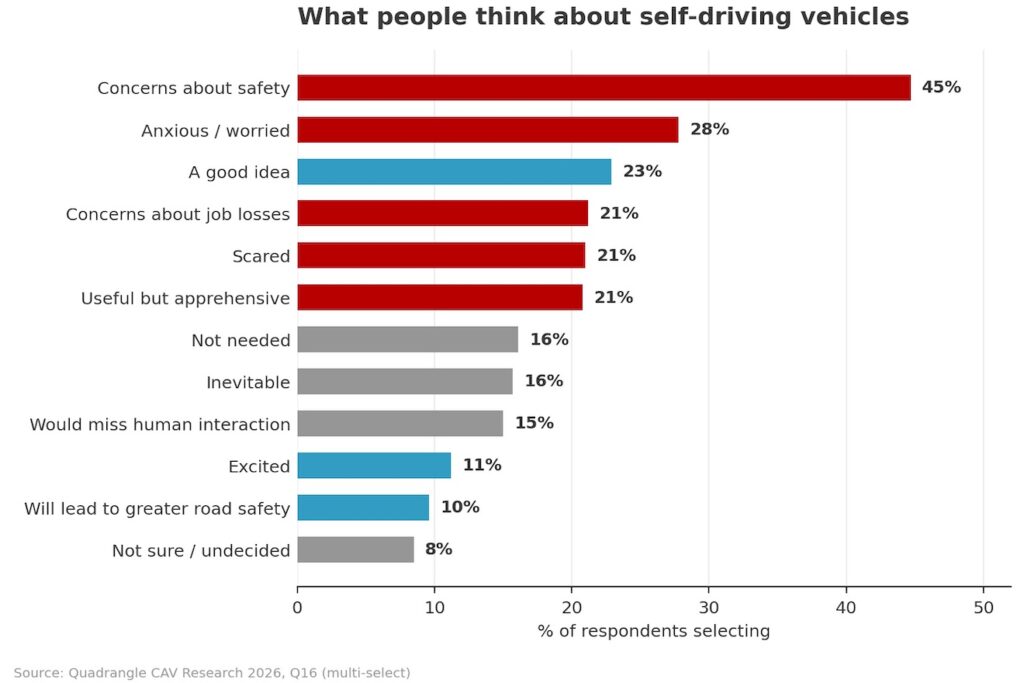
Asked directly what they think about self-driving vehicles, 45% cite concerns about safety, rising among older adults. It isn’t all negative: 23% still think it’s a good idea (37% among millennials), and encouragingly 11% say they’re excited.
Confidence in AVs correlates with age, but it’s wrong to assume younger people are always the most comfortable. Gen Z’s confidence currently tracks below that of Millennials. If the industry is confident in AV safety, the job now is to educate the public.
Even support for the lower levels of automation, proven safe and helpful, sits at only around 7 out of 10, pointing to a general wariness of “the robots.” Anything up to L3 (conditional automation) gets equivocal support from most under-45s, but full autonomy scores below 5 out of 10 for most people. That lack of demand that would normally get a project canned like tuna.
What could actually build acceptance?
Sell the sizzle, not the sausage! It’s what’s exciting about a product that makes it appealing, not it’s prosaic competence. Much of the self-driving industry is populated by people who think the solution IS exciting, but much of the public just don’t care.
“It could help you be less angry in traffic” isn’t exactly sizzle, but “being able to do other stuff when in traffic” is. In fact, it’s the single biggest driver of acceptance.
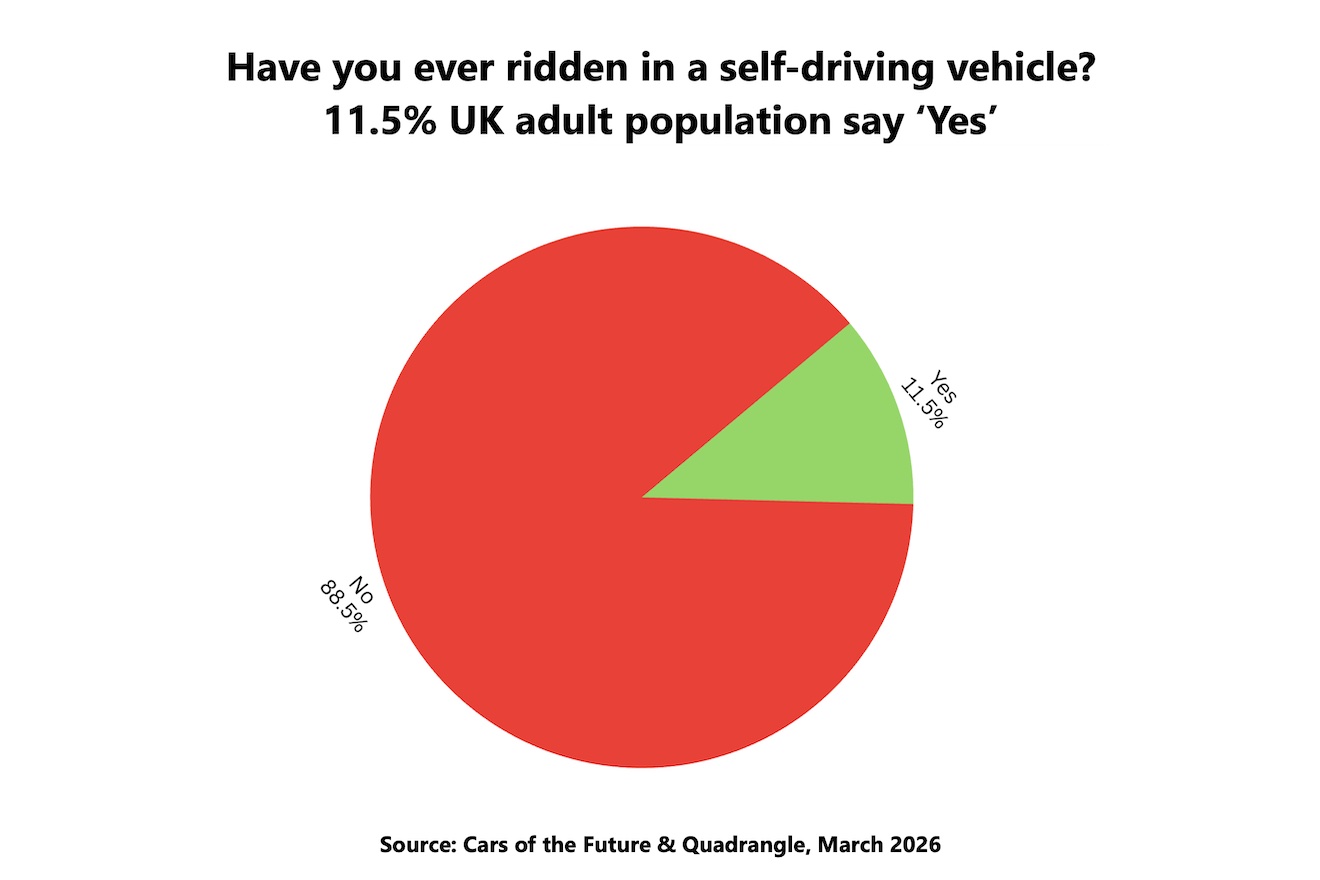
So, how do we make automated driving interesting? Having ridden in an AV is a strong predictor of acceptance, pointing to education and first-hand exposure, rather than marketing as the best route in.
Age does a lot of work here. Younger people are more likely to say it’s a good idea but report equal levels of safety concern to their elders.
Older respondents raise more technical concerns, which matters, since they’re disproportionately the target market. Younger people are more mobile and urban, with more transport options already, while older and rural populations stand to gain most from AVs but are the most resistant.
When it comes to building confidence, younger people want proof that the technology is safe. Older people want it introduced slowly. The ask, in short, is to take it easy. Show-and-tell matters more than some snazzy website. Perhaps unsurprisingly, younger people prefer to learn via YouTube while older people prefer TV.
The enduring pull of “my own car”
The number of people saying they will “always drive themselves,” even once AVs are affordable and available, has dropped since 2019, led by Gen Z and Millennials. But a full quarter of that age group still want to drive, and the rest aren’t necessarily looking for AVs to replace their driving pleasure altogether.
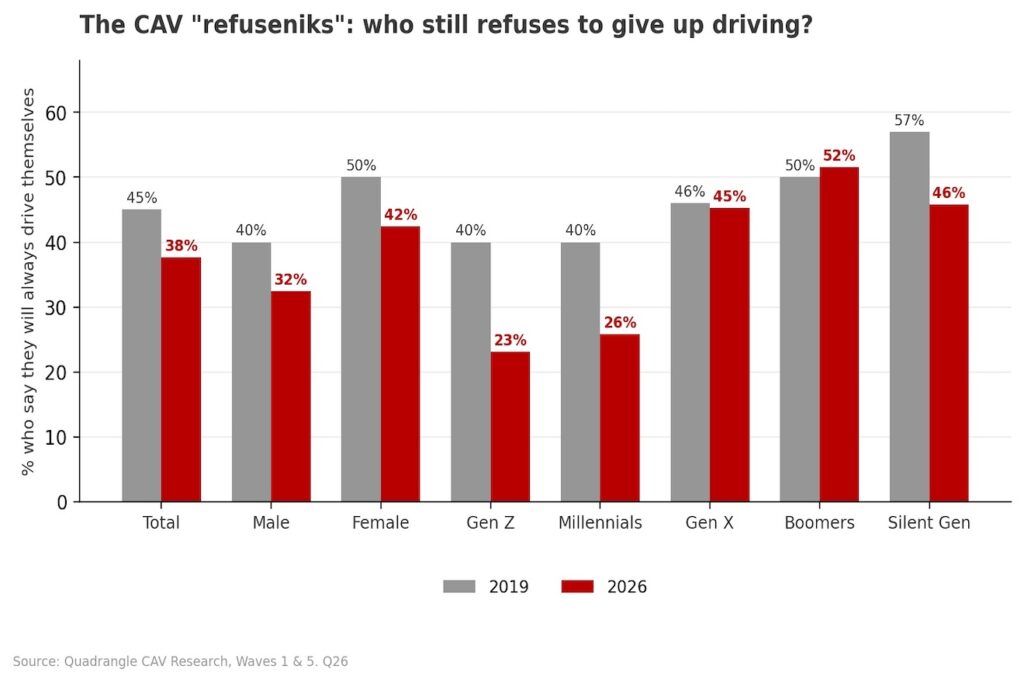
That’s echoed in people saying they’d still want to own a car for recreational use, even once CAVs cover everyday needs affordably. The desire for expressive personal transport endures.
Gen Z and Millennials (the cohorts most likely to give up everyday driving) are also the most likely to want a sports car, luxury car or SUV for fun. SUVs in particular remain popular well beyond their actual ‘utility’.
Closing the trust gap
The public isn’t waiting for AVs to get a bit safer or a bit more available. Five waves and seven years of data all point to the same conclusion: this is not a technology or availability problem, it’s a trust problem.
Closing the trust gap will take sustained, honest education rather than a few launch events and ad campaigns. If you’d like to discuss any of these findings, or access our more in-depth data, please do get in touch.