Despite the longstanding Cars Of The Future mantra that assisted driving and self-driving must be keenly disassociated, the problem persists, as clearly illustrated by our recent survey.
Concerns have also been raised, by the European Transport Safety Council, among others, that hands-free could introduce new risks.
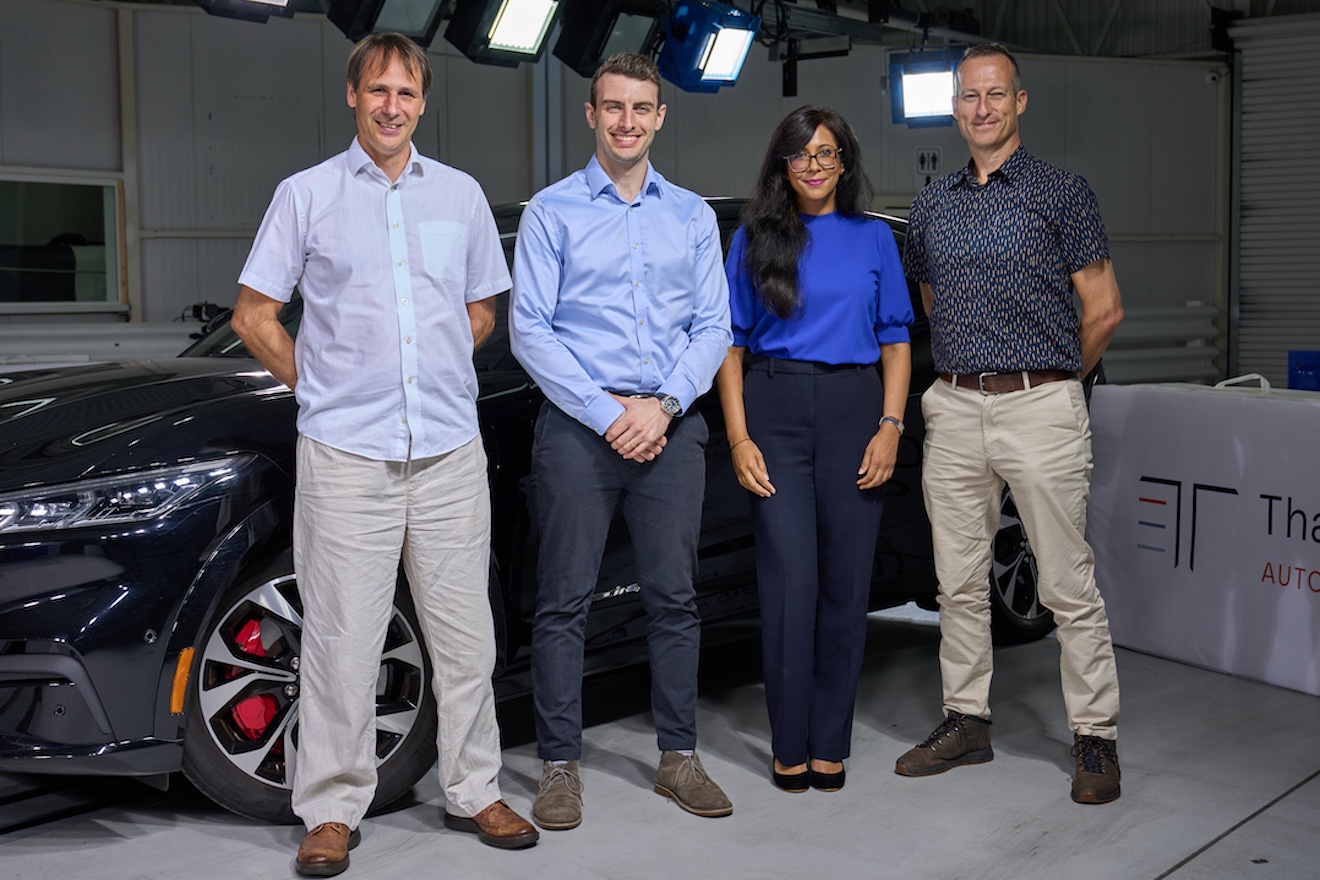
To find out more, and explore potential solutions, we accompanied independent road safety campaigner Meera Naran MBE, and mobility expert Dr Nick Reed, on a trip to the UK’s leading automotive risk intelligence organisation, Thatcham Research.
It was Tuesday 11 August 2026, another blisteringly hot day in a scorching British summer. Our host was Tom Leggett, vehicle technology & research manager at Thatcham Research, who first helped us experience some cutting-edge Advanced Driver Assistance Systems (ADAS), and then led an info-packed roundtable discussion.
Ford Mach-E hands-free road test
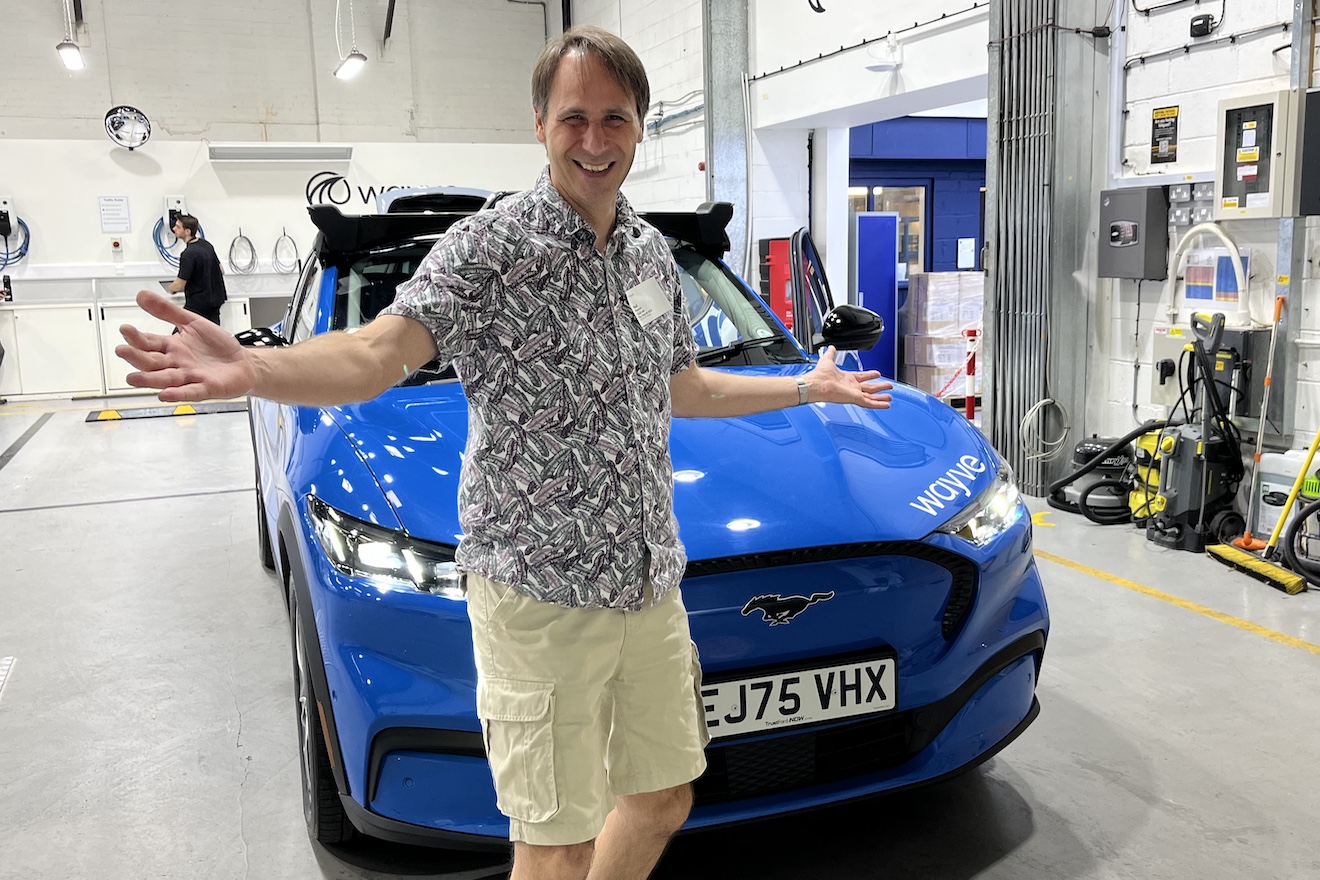
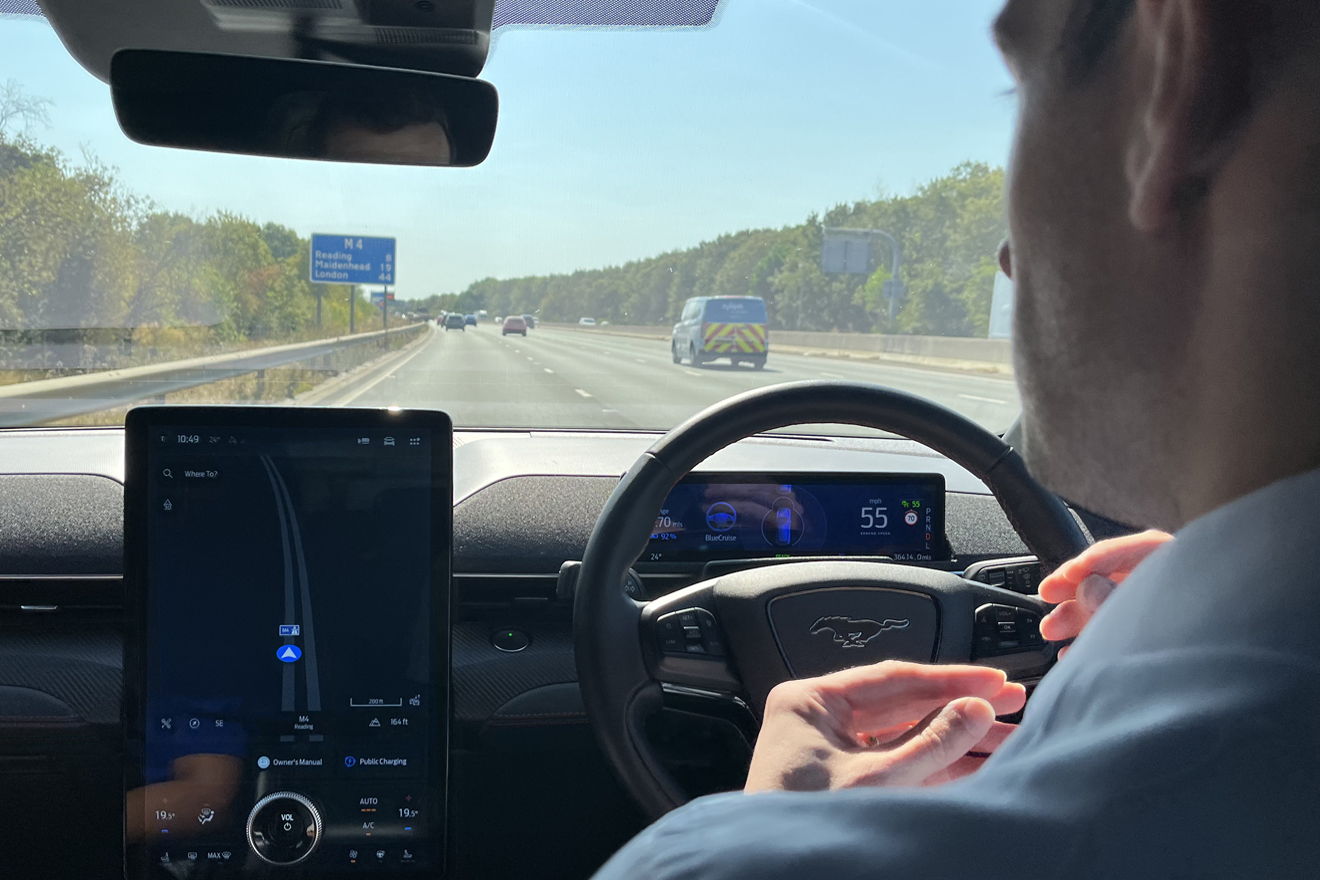
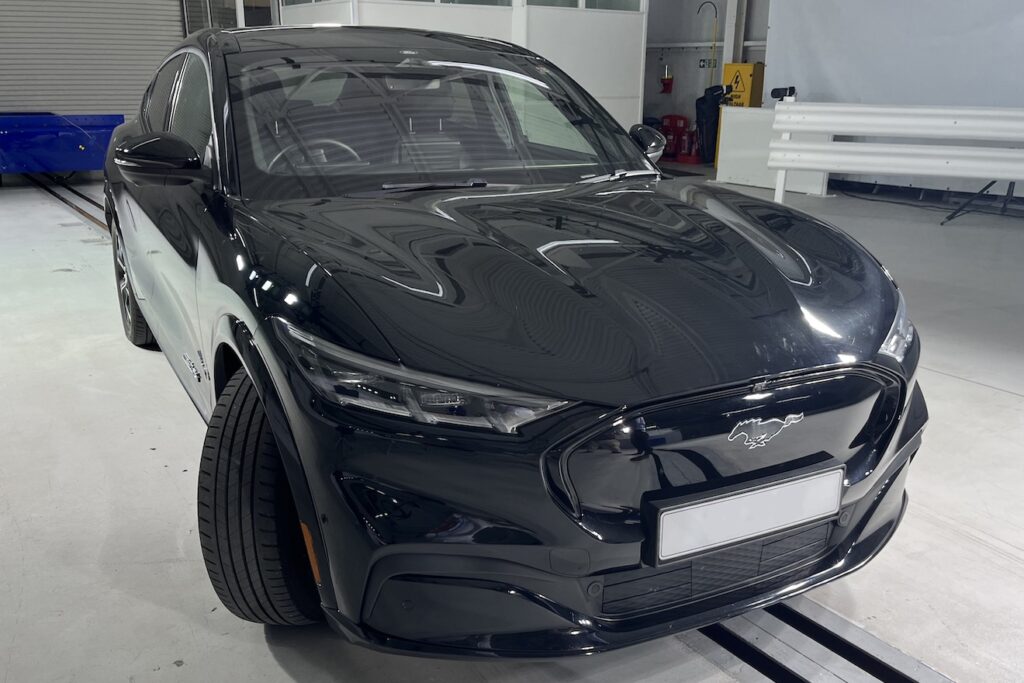
The first car we got to try was a Ford Mustang Mach-E with BlueCruise, on the M4 near Reading – at the time of writing still the only legal hands-free system available to the UK public.
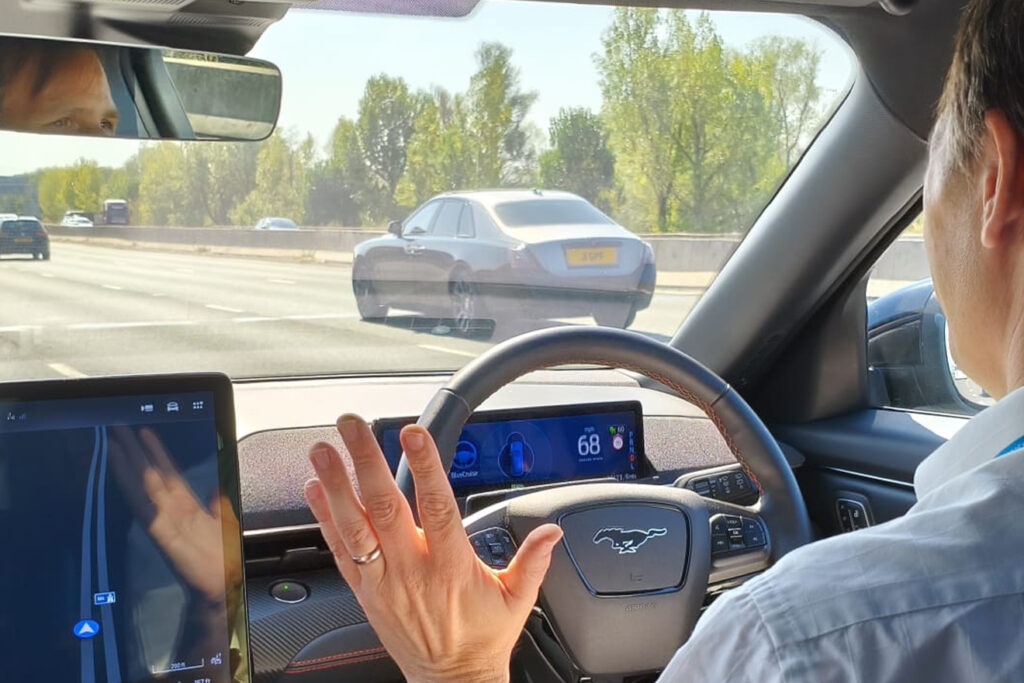
Cars of the Future editor Neil Kennett goes hands-free in a Ford Mach-E, August 2026
Back in April 2023, to the surprise of almost everyone, the DfT approved its use on parts of the UK motorway network. We described it as a bolt from the blue oval. Thatcham immediately acquired one and Leggett has been using it ever since, clocking up around 10,000 hands-free miles, which must surely be some kind of record?
After he showed us the ropes, we all got the chance to drive it. You can go hands-free but must pay constant attention. You are still liable. Look away from the road for more than five seconds and the driver monitoring system starts giving audible warnings, directing you to look back to the road.
It was a strange new experience, requiring full concentration on driving while resisting the deeply embedded instinct to grab the wheel. The system was reasonably intuitive and seemed to work safely enough, although the ability to set the speed above 70mph is concerning.
BMW iX3 hands-free test ride
The second car we got to try was a BMW iX3 Neue Klasse with the new Highway Assistant system, recently launched in Germany and coming to the UK soon. Only Leggett was allowed to drive what he described as “The most collaborative ADAS we’ve ever had at Thatcham”.
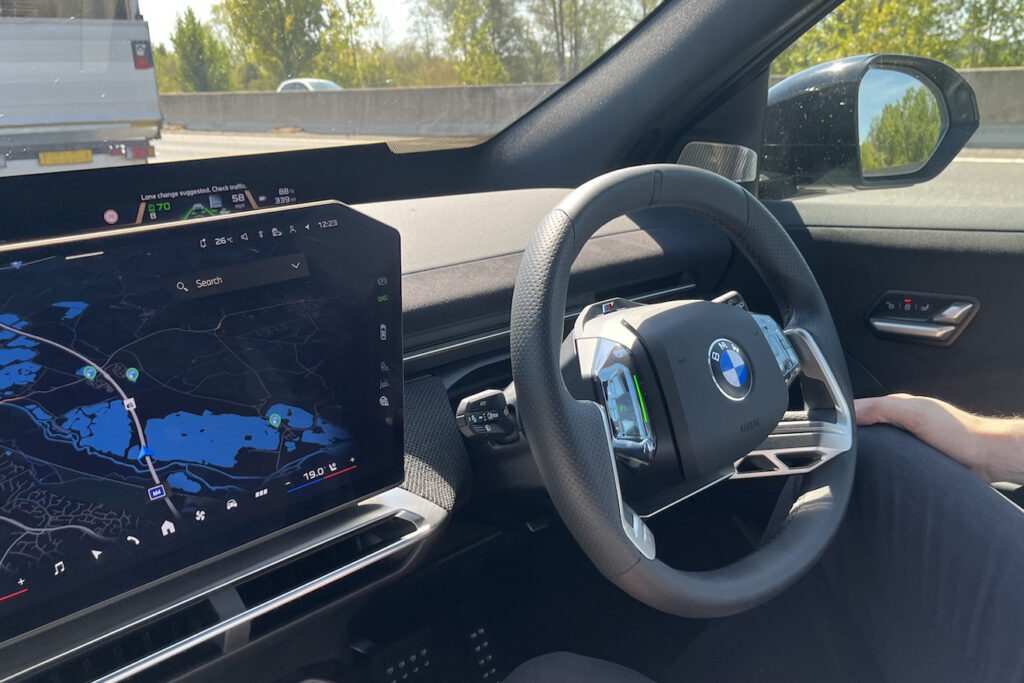
Unlike BlueCruise, which was introduced under an exemption, the new BMW system is both UNECE Regulation 171 and EU General Safety Regulation 2 (GSR2) compliant. Reg 171 establishes uniform provisions for Driver Control Assistance Systems (DCAS) including Adaptive Cruise Control (ACC), Lane Keep Assist (LKA) and Traffic Jam Assist.
BMW has a reputation for technical excellence and the new iX3 is expected to be popular with fleets. The most attention-grabbing feature was glance initiation, where the driver can trigger a safe lane change, when prompted, simply by looking at the door mirror. Literally a new driving skill.
Hands-free expert comment
“Initially, our hypothesis was that, with hands off the wheel, the driver might become less engaged, that their attention might start to wander,” said Leggett. “My personal experience is that it feels quite unnatural not to look forward.
“In my view, the BMW system is more collaborative. Bear in mind that the Mach-E was £62k new, but that was four years ago. You can buy them second-hand now, then it’s £18 a month for the BlueCruise. The BMW starts at £55k, then we believe the hands-off feature will cost around £900 for four years of activation. On long journeys hands-free reduces the physical load, which I feel improves safety.
“Anecdotally, when I tell friends and family about this stuff, they don’t use even basic cruise control, let alone adaptive. Every time I pass another Mach-E on the motorway I try to see whether they’ve got their hands on the wheel, whether they’ve got BlueCruise. I’ve never seen anyone else using it.
“Both the Mach-E and the BMW seem to respond well around motorbikes and HGVs. If you’re overtaking an HGV, the Mach-E actually moves slightly further away within lane, just for comfort. As my main car for motorway journeys, I wouldn’t have one without this functionality now.”
Hands-free not self-driving
Hands-free assisted driving and automated driving are both potential gamechangers for safety. They can appear remarkably similar. However, while the implications of confusing a butterfly with a moth generally aren’t earth-shattering (sorry lepidopterists), the importance of clearly differentiating between ADAS and self-driving cannot be overstated.