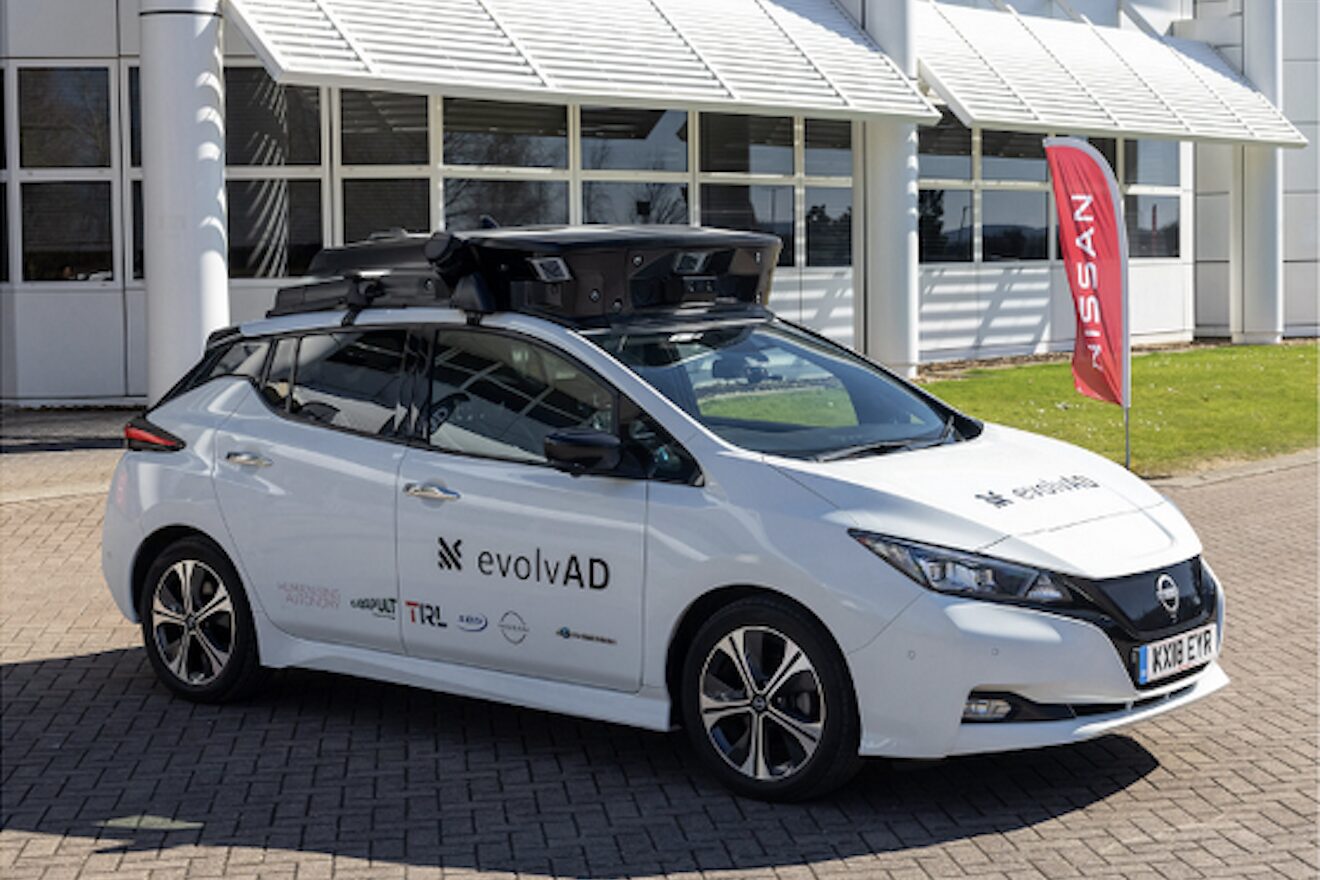
The day after the Cenex-Nissan evolvAD test ride, came the Expo itself, showcasing an array of groundbreaking net zero and self-driving innovations.
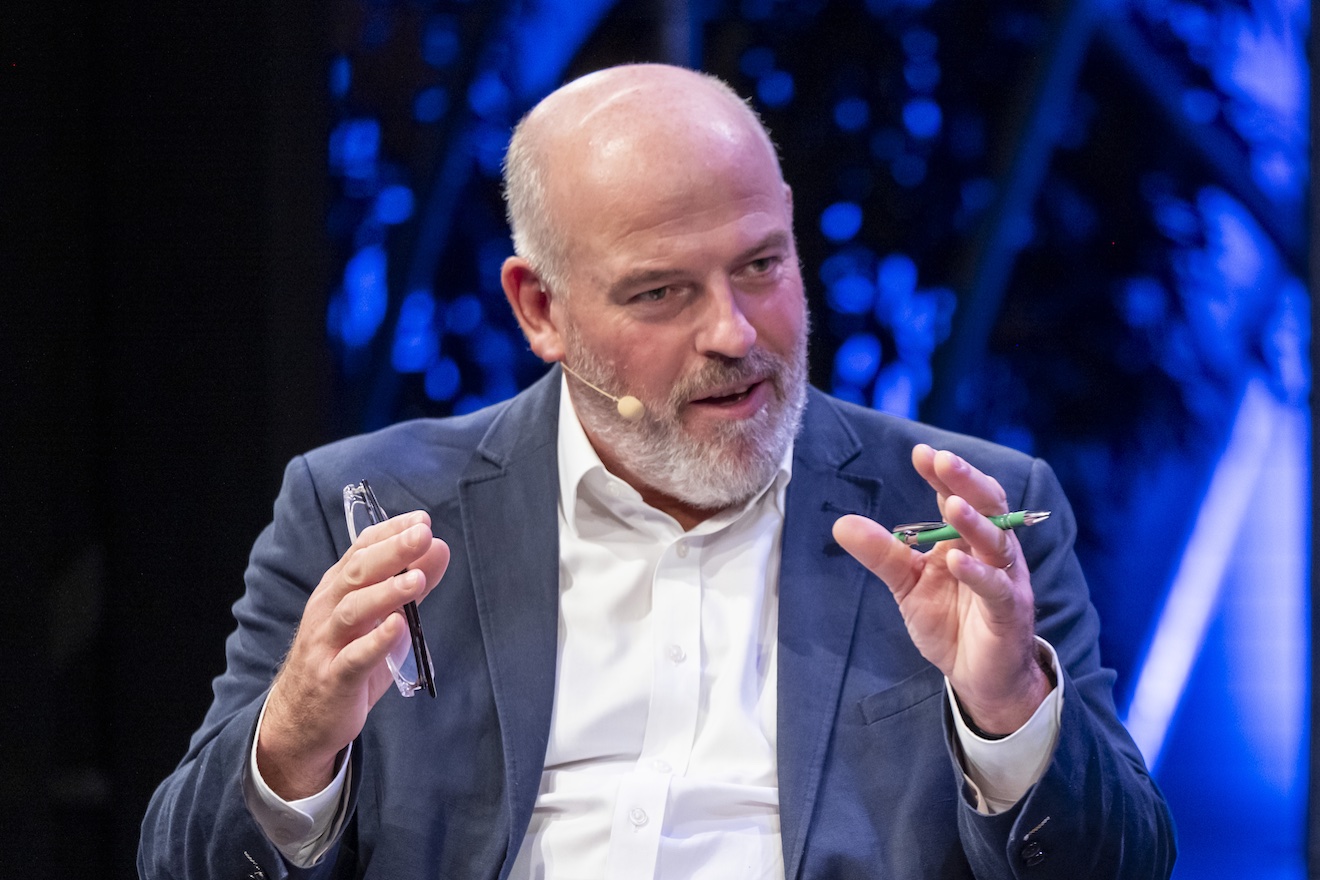
We must start, of course, with the news of additional multi-million-pound UK government backing for CAM Pathfinder. Following a welcome by Cenex chairman Dennis Hayter, the Rt Hon. Sarah Jones MP, Minister of State for the Department for Energy Security and Net Zero (DESNZ), and the Department for Business and Trade (DBT), announced £36.5m in new funding to give “confidence and certainty for the next 10 years”.
Export success – “Made in the UK, sold to the world” – was the key message. Further details were provided during The CAM Opportunity panel, chaired by the SMMT’s David Wong and featuring David Skipp, of the Automotive Council, Simon Connick of CCAV, Mark Cracknell of Zenzic, and Prof. Siddartha Khastgir of PAVE UK.

Skipp described the UK as being in the leading group of CAM innovators, a little behind the US and China in terms of rollout, but still very much at the forefront of the race to scale. “Most companies that will become big in this probably already exist now,” he said. “We must leverage UK strengths to create an irresistible investment proposition.” For example, in cybersecurity.
Connick then highlighted CCAV’s Automated Passenger Service Consultation, and the UK’s role in developing international standards via the World Forum for Harmonization of Vehicle Regulations, before handing over to Cracknell to outline the main facets of the refreshed CAM Pathfinder programme.
CAM Pathfinder
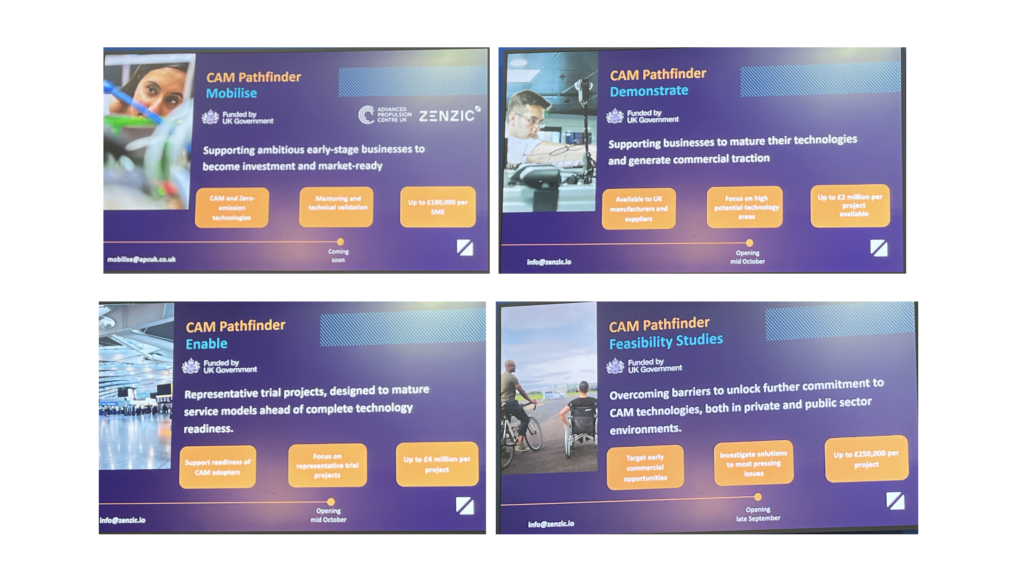
Designed to position the UK as a maker, not just a taker, of cutting-edge CAM technologies, the new money will be divided across four competitions:
- CAM Pathfinder Mobilise to support ambitious early-stage businesses
- CAM Pathfinder Demonstrate to support businesses to mature their technologies
- CAM Pathfinder Enable to support representative trial projects
- CAM Pathfinder Feasibility Studies to overcome barriers to further commitment
After Khastgir set out PAVE UK’s recent educational work, at the Goodwood Festival of Speed and Cheltenham Festival of Science, a Q&A focussed on the role of insurers and vehicle manufacturers (VMs), particularly in promoting accurate messaging about self-driving.
“The UK is the only country that has this concept of misleading marketing,” noted Khastgir. “We should be very proud of that, especially as other countries, like China, are beginning to think in those terms.” It will require “understanding risk in a different way, a fundamental change,” added Cracknell.
Best ever UK self-driving vehicle line-up?
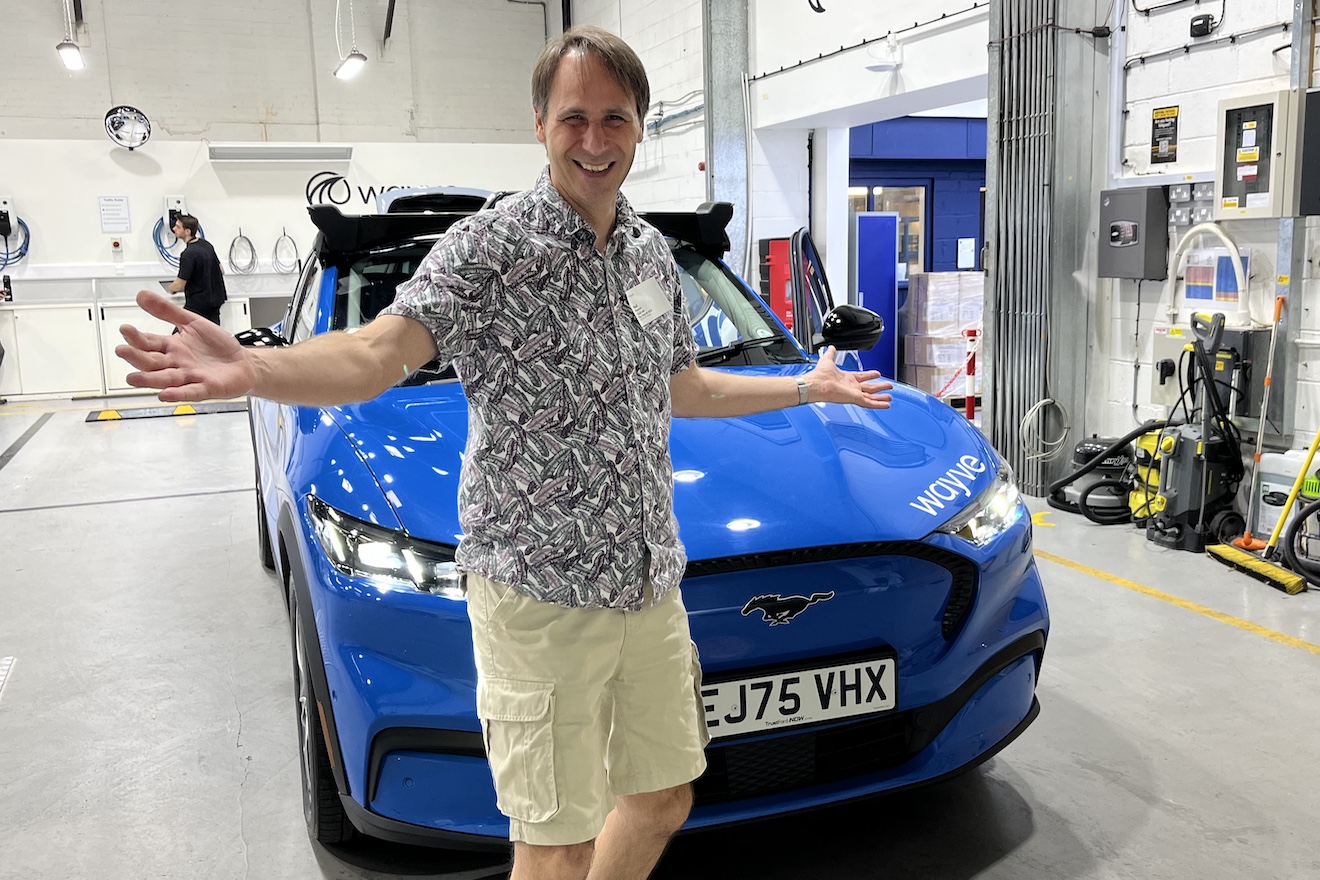
Seeing is believing, so what better way to illustrate the near commercial opportunities than with the most impressive line-up of self-driving vehicles we’ve seen at any UK event to date.
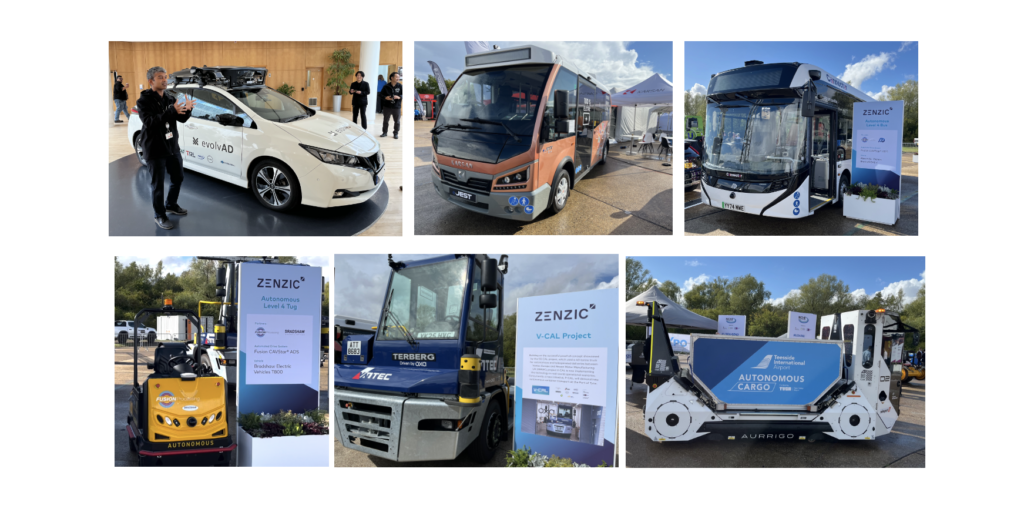
In addition to the aforementioned Nissan evolvAD project car, and other self-driving-ready vehicles, such as the Karsan e-Jest minibus (in partnership with Adastec), there was a brand new Alexander Dennis Enviro100AEV bus fitted with the Fusion CAVStar automated driving system (ADS), a Bradshaw T800 electric autonomous tug (also with CAVStar), the V-CAL Project Terberg truck, driven by Oxa software, and the Aurrigo Auto-DollyTug from Teeside International Airport.
Plenty of food for thought for members of the new Airside Automation Group, established by Zenzic to unlock airport transformation.
“The group provides a vital platform for industry and innovators to come together, share learning, and accelerate the development of the next generation of connected and automated solutions,” said Andrew Cornish, Non-Executive Chair at Aurrigo.
On board the Enviro100AEV, Jim Hutchinson, CEO of Fusion Processing, and Jamie Wilson, Head of Advanced Engineering at Alexander Dennis, explained the benefits of No User In Charge (NUIC) operations, in freight, logistics and passenger transport.
The ‘small big bus’ has been developed as part of the Connector project, led by the Greater Cambridge Partnership and backed by Innovate UK and CCAV. “It is best in class, designed and built right here in the UK,” said Wilson.
“With projects such as the TfL depot trial and the AutonoBus track demonstrations, we are proving that NUIC technology can deliver meaningful safety, efficiency and operational benefits,” added Hutchinson. “These milestones move us closer to the day when autonomous buses can operate seamlessly in real-world environments.”
Back inside the main hall, other exhibitors with a keen interest in self-driving included Bosch, speed and distance measuring specialist, Datron, and advanced simulation solutions provider, KAN Engineering, plus multiple complementary products and services, notably the Tual chargers for fleets.
Start-up success
Across the show, there were encouraging tales of start-ups beginning to grow, launch new products and employ more people, from Oxford RF and About:Energy on the Innovate UK stand, to RAM and Altilium on the Advanced Propulsion Centre (APC) stand.
The final CAM seminar on the Wednesday, hosted by Innovate’s Richard Morris, featured James Dickie, of embedded systems specialist ETAS, followed by George Ye of UBIPOS, profiling their low-cost position, navigation, timing and sensing (PNTS) solution, and Dr Rimali Mitra on HD mapping for AVs using high-res aerial imagery.
Opening Day2, Lilian Greenwood MP, Minister for the Future of Roads at the Department for Transport (DfT), praised Cenex 2025 for delivering a world-class display of the very latest net zero and self-driving technology. It was indeed.
Shortly after making this speech, Greenwood was reshuffled to the Whip’s office. In her year at the DfT she was a champion for CAM, most memorably at the ITS Parliamentary Reception. We wish her every success.