A couple of weeks ago we signposted the Beam Connectivity webinar on the EU Data Act as a chance learn more about one of the most significant recent pieces of CAM-related European legislation.
A lot has happened since then, not least Beam regaining their V2X title at the Self-Driving Industry Awards 2025.
The webinar itself – full title “The EU Data Act and the Extended Vehicle API: compliance, cybersecurity and data monetisation” – was certainly an eye-opener.
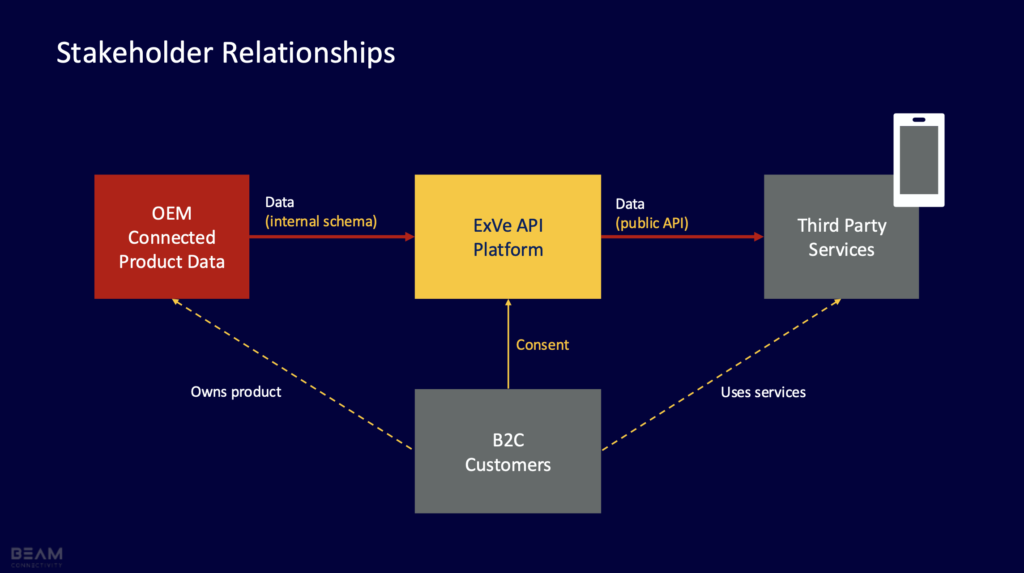
Beam’s Director of Product Marketing, Dr Richard Oxland, began by setting out how the Act mandates a consent-based model for sharing data generated by a vehicle with the user, the vehicle owner, at the centre.
“Importantly, it specifies tightly under what circumstances the data can be accessed, and for what purposes,” he said. “It became generally applicable on 12 September 2025, affecting all devices which generate connected data, not just cars! The Act has major implications for UK businesses that bring connected device products to market in the EU, or use EU data.”
Such organisations must:
- Comply with access rights for users of connected products.
- Comply with obligations on data processing service providers.
- Ensure contracts entered after this date meet new rules on unfair contract terms.
- Make data available to public sector bodies where there is an “exceptional need”.
Noting that micro and small companies are currently exempt, and medium-sized companies still have a year to comply, Oxland warned that those found to be in breach can face substantial sanctions – a fine of up to €20m or 4% of global revenues. Ouch!
VM web services
For vehicles manufacturers who need to comply, Beam’s most recent product launch is a plug and play solution for all the activities that must be carried out under the EU Data Act.
It is a set of web services which provide not only “Auditability of consent”, but also the ability to “Create value by combining, aggregating or processing the raw data into consumable products”.
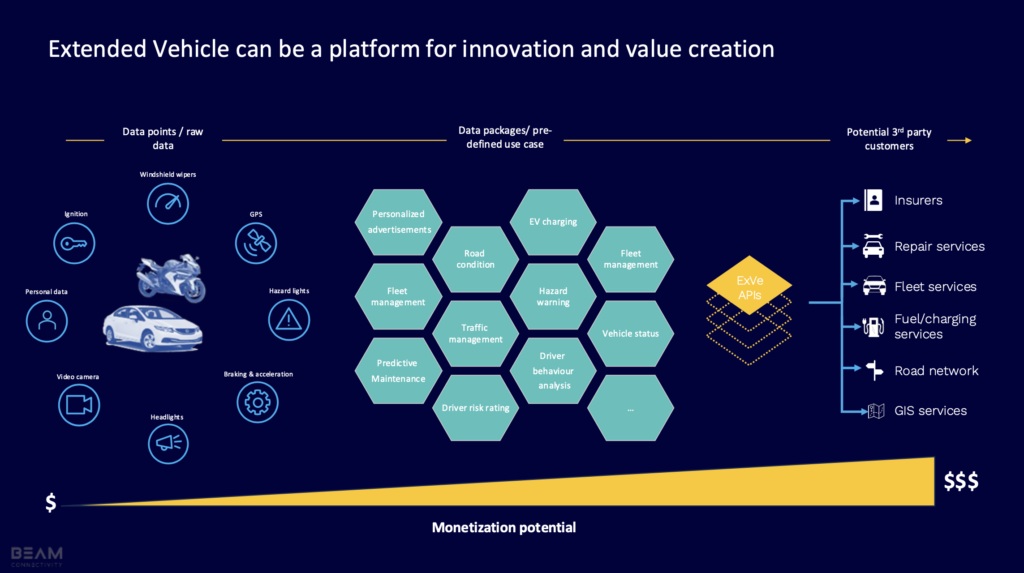
Beam Co-Founder and CTO, Rob Potter, then delved into the technical details. “Today’s connected road vehicles generate enormous amounts of data that may be valuable to someone,” he said.
It might be personal data from infotainment selections, video from on-board cameras, or information about a driver’s braking and acceleration preferences.
CAM use cases
You can imagine all kinds of use cases – from sharing real-time info about road condition with other cars nearby, to insurance models based on real-world individual driver data.
As a partner to their CVaaS platform, Beam have implemented an Extended Vehicle (ExVe) API, using the new ISO 20078 ExVe web services standard for road vehicles.
This provides an EU Data Act-compliant mechanism where vehicle data can be packaged up into valuable products and with which user consent is managed.
Third-party developers can request consent for a particular ‘container’ of data, such as core telemetry, with debugging and error handling bundled in.
Oxland then returned to summarise the key points:
- The EU Data Act is already enforceable for most organisations selling into the EU.
- Requirements include making data available to users on request.
- Users can give consent to third parties and this must be facilitated.
- ISO 20078 defines a standard way for automotive manufacturers to comply.
Last, and perhaps most interestingly…
- Data services offer an opportunity for innovation and monetisation.
There was just about time for a quick Q&A. One attendee asked about the definition of “real-time”. Potter replied that “in technical terms it could be nanoseconds” but practically should be considered under “reasonable endeavours”.
And “What do Beam consider the most pressing cybersecurity concern?” Potter asserted that “A well-implemented API should be secure” but noted that care must be taken with anonymised datasets as “with enough data, they can be de-anonymised”.
Plenty of food for thought, then, for third party app developers hot on the many fast-emerging ExVe opportunities.
For further info visit the Beam website or email hello@beamconnectivity.com