Providing self-driving car news since 2019, Cars Of The Future is a trusted source on global and UK trends. Following passionate feedback to his 2018 article, Autonomous Now, for The Institute of the Motor Industry, motoring journalist Neil Kennett identified an urgent need for a new independent voice on driverless cars.
Recognised as a Zenzic CAM Creator, this publication has closely followed multiple government-backed pilot programs and other initiatives that advance the development of self-driving car technologies – from automated features on private cars to fully driverless taxis, buses and trucks.
With appropriate regulatory oversight and consumer approval, self-driving cars can be a transformative transport technology which improves both road safety and mobility.
Notably, Waymo is planning to launch a government-backed pilot scheme to trial public robotaxis in London in the second half of 2026. The Alphabet company will face stiff competition though, not least from London-based Wayve, in partnership with Uber.
These projects highlight the important ongoing collaboration between industry leaders, academia, and government, to accelerate autonomous vehicle deployment.
Cars Of The Future’s continuing mission is: “To chart the development of, and encourage sensible debate about, all aspects of self-driving.” We promote informed opinion in a sector plagued by hyperbolic headlines.
Back in 2020, we were recognised as a Connected and Automated Mobility (CAM) Creator by Zenzic, the organisation charged with “accelerating the self-driving revolution” in the UK.
We have since signed multiple prestigious media partnership agreements, notably with BSI (the UK national standards body), MOVE and Reuters Events.
These saw our editor moderating high profile panel discussions on everything from advanced driver assistance systems (ADAS) and software-defined vehicles (SDVs), to net zero technologies – including hydrogen and battery electric vehicles (BEVs) – as well as self-driving.
Other important Cars Of The Future milestones include our first e-newsletter, published in 2022, the inaugural Self-Driving Industry Awards in 2023, and our first hard copy magazine in 2024.
We cover all kinds of on- and off-road driverless vehicles – cars, robotaxis, buses, trucks, shuttles, and robots – occasionally drones, autonomous electric vertical take-off and landing (eVTOL) aircraft, boats and even spacecraft.
Our first love, though, is good old automobiles. “I still love cars and driving,” said Kennett, in 2023. “However, I firmly believe that CAM will be utterly transformative. It’s a fascinating area with unique selling points, increasingly distinct from traditional automotive.
“Here at Cars Of The Future we believe that, if adopted sensibly, self-driving cars will dramatically improve safety and combine with zero emissions, mobility-as-a-service (MAAS) and active travel to transform road transport around the world.”
For crystal clarity, as of early 2026, you won’t find any fully self-driving cars for sale at your local UK car dealership.
Let’s talk levels. In 2014, the US-based SAE International, formerly the Society of Automotive Engineers, created a classification system for self-driving cars based on the amount of human attention and intervention required when driving.
The key document is SAE J3016 Recommended Practice: Taxonomy and Definitions for Terms Related to Driving Automation Systems for On-Road Motor Vehicles – updated in 2021.
This defines six levels, ranging from Level 0 (fully manual), through Level 1 systems like adaptive cruise control (ACC) and automatic emergency braking (AEB), through Level 2 systems like lane keeping assistance (LKA), to Level 5 (fully autonomous). The term ‘automated car’ is often used to describe vehicles rated L4 and above.
For levels 0-2, it says: “You are driving whenever these driver support features are engaged – even if your feet are off the pedals and you are not steering” and “You must constantly supervise these support features; you must steer, brake or accelerate as needed.” Basically, you’re still a driver.
Adaptive cruise control (ACC) is a key Level 1 automation feature that helps maintain a safe distance from the vehicle ahead by automatically adjusting speed.
Lane keeping assistance (LKA) is one of the most popular Level 2 systems. It combines active steering, braking, and acceleration to keep a vehicle centred within its lane, while also maintaining a safe distance to the cars ahead.
As of 2023, many commercially available new cars have been classed as Level 2. Tesla models with Autopilot, for example, were classified as having Level 2 ADAS.
Expectations for levels 4-5 are straightforward enough too: “You are not driving when these automated driving features are engaged – even if you are seated in the driver’s seat” and “These automated driving features will not require you to take over driving”. Basically, you’re no longer a driver.
Which leaves L3 models, and the instruction: “When the feature requests, you must drive”, applicable to, for example, “traffic jam chauffeur”. In some ways, this is the most controversial aspect, with some experts vehemently opposed to systems involving the handing over and/or retaking control.
Level 3 vehicles are conditionally automated, with the automated driving system (ADS) handling some driving tasks. Importantly, at L3 the human driver must remain alert and ready to intervene when prompted.
In 2023, Bill Gates, noted: “The first L3 car was recently approved for use in the US although only in very specific conditions.”
That was Mercedes’ Drive Pilot, initially available on 2024 S-Class and EQS Sedan models. “Certification in Nevada marks the start of international rollout and, with it, the dawning of a new era,” said Mercedes-Benz CTO, Markus Schäfer.
In the UK, in 2023, The Department for Transport (DfT) approved the use of Ford’s L2 BlueCruise system on some parts of some motorways – the first time any UK driver could legally take their hands off the wheel.
Ford, government ministers, Thatcham, and others, emphasised it was only ADAS, but that didn’t stop the media from misleadingly describing it as self-driving.
A key controversy with L3 is the need for the driver to be ready to retake control, especially during critical moments – does that improve road safety?
And here’s the crux – as Dr Nick Reed, of Reed Mobility, told parliament’s Transport Select Committee, the levels “…work from an engineering perspective, but they don’t work very well from a communications perspective.”
The most advanced new technology, Level 4 automation, enables a self-driving car to operate without human intervention in specific scenarios or environments, known as their operational design domain (ODD).
In these situations, the vehicle is capable of navigating and making decisions without any human input, so long as it remains within its ODD.
The ODD differentiates Level 4 from 5, with BSI’s CAM vocabulary telling us this can include environmental factors, time-of-day restrictions, and road characteristics – including the number of other nearby vehicles.
While San Francisco remains a hotbed for L4 taxis, L5 represents top-of-the-shop self-driving, where the driverless car can operate in all conditions. Full Level 5 autonomy has not yet been achieved.
In America, self-driving expert Alex Roy has suggested a self-driving car litmus test called Roy’s Razor. “Can you get in, pick a destination and safely go to sleep?” he asks. “If yes, it’s self-driving. If no, it’s not.”
Sadly, the internet is awash with less-than-sensible people climbing out of the driver’s seat in their L2 cars – that’s not self-driving, it’s also not legal! So how about this… ask: Has it got a steering wheel?
Audi has been down this road with its Grandsphere concept car. When in “hands-off” mode, the wheel folds neatly away. That certainly removes any doubt as to whether the driver is a User in Charge, (UIC) to use The Law Commission of England and Wales’ language.
“We will be ready for Level 4 driving in the second half of this decade,” said Audi spokesperson, Josef Schloßmacher.
Could 2026 be the year when robotaxi services finally hit UK streets? Already completing over 400,000 paid rides a week in the US, the clear industry leader is Waymo, formerly known as the Google Self-Driving Car Project.
Now shifting “from experimentation to scale”, it recently announced plans to launch a premium app-based ride-hailing taxi service in London in 2026.
Waymo was the first to offer autonomous taxi rides, albeit in small strictly controlled ODDs, back in 2020 – as documented by our 2025 Self-Driving Consumer Champion, Youtuber JJ Ricks.
In America, Waymo is already running robotaxi services in Phoenix, San Francisco, Los Angeles and Austin, using modified Jaguar I‑PACE, Hyundai Ioniq 5 and Zeekr cars. In 2026, it launched its 6th-Generation Waymo Driver package, featuring lidar, cameras and radar.
Waymo won our inaugural Consumer Service prize at the Self-Driving Industry Awards (SDIA) 2024.
To run robotaxis – or any autonomous on-road vehicle for that matter – in the UK with no on-board driver will require a legal change.
Intriguingly, in January 2026, Local Transport Minister Lilian Greenwood announced: “We’re supporting Waymo and other operators through our passenger pilots, and pro-innovation regulations to make self-driving cars a reality on British roads.”
In the US, taxi services from companies like Waymo and Amazon’s Zoox are starting to compete directly, notably in San Francisco.
Zoox, part of Amazon, is offering autonomous test rides in Las Vegas, Austin and Miami using its autonomous bidirectional shuttle, known colloquially as “the toaster”.
Other notable self-driving taxi operators include Motional, a joint venture between Hyundai Motor Group and automotive technology supplier Aptiv.
In China, Baidu’s Apollo Go taxi service is reportedly delivering over 250,000 autonomous car rides per week in Wuhan, Beijing and Chongqing. Leading ride-hailing companies Lyft and Uber both partner with Baidu.
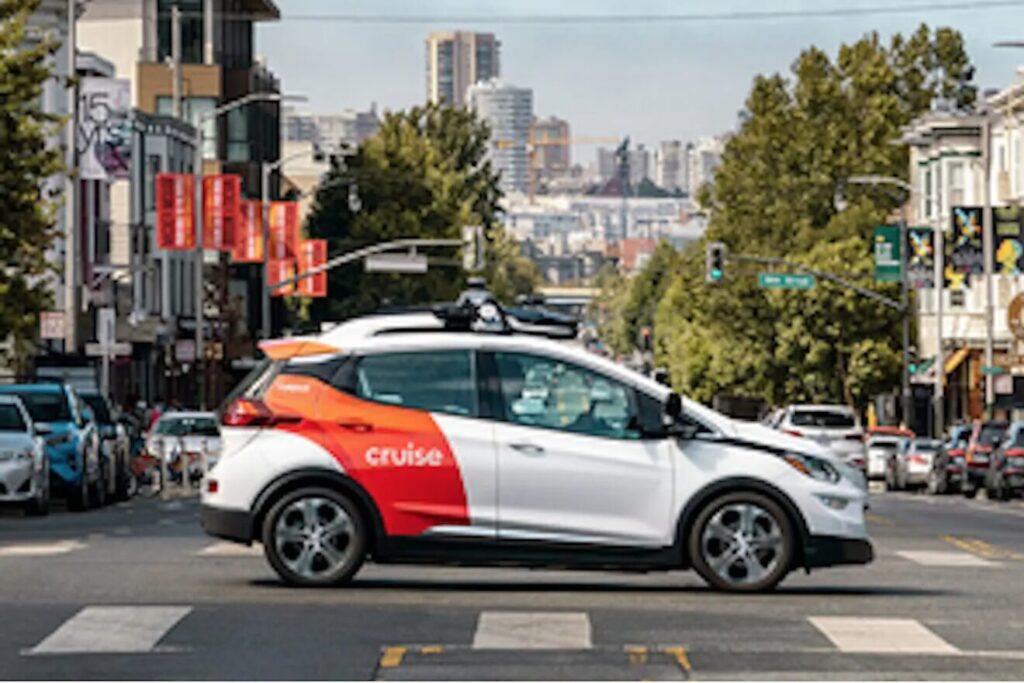
For a short time, GM achieved the cherished status of robotaxi market leader with its Cruise brand operating in San Francisco using Chevrolet Bolt automated electric vehicles (A-EVs). However, following an incident in October 2023, the California Department of Motor Vehicles suspended their testing permit. Not so super cruise.
A key difference with taxis, compared to personally owned cars, is, of course, that the service provider takes care of the legalities regarding insurance and maintenance.
Companies such as Lucid Motors are aiming to deliver some of the world’s first privately owned L4 driverless cars.
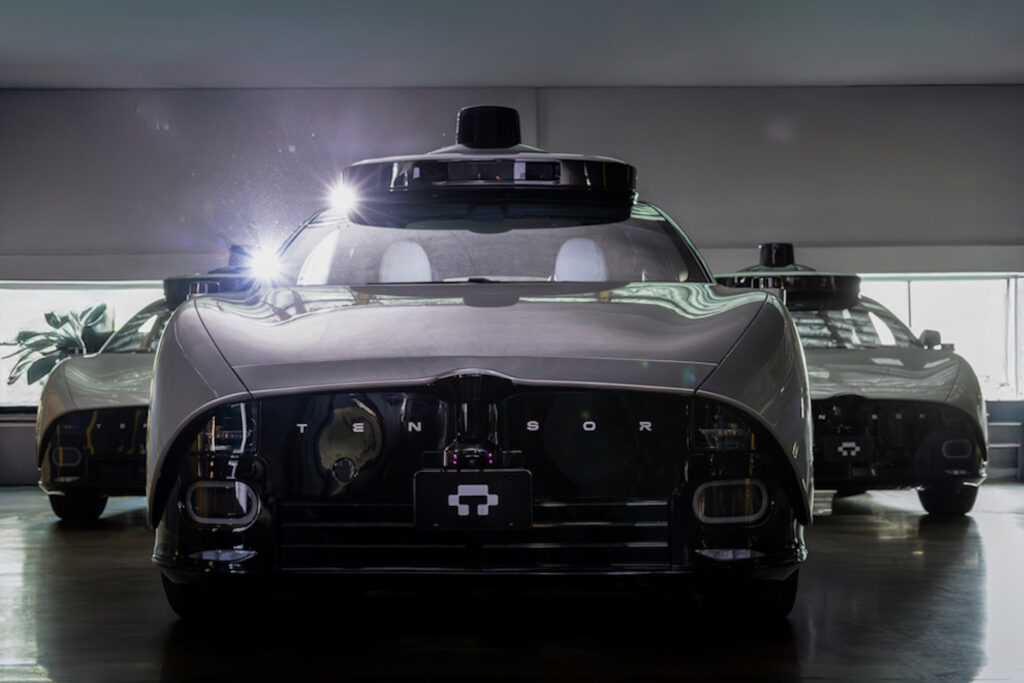
In February 2026, California-based Tensor received approval from Dubai’s Roads and Transport Authority (RTA) to test its L4 personal vehicles in the United Arab Emirates (UAE).
Its ambition is to provide: “The world’s First Personal Robocar… a complete reimagining of the personal vehicle with true L4 autonomy”.
Widely respected in L2 driver assistance, with its Highway Assistant, BMW AG has described the technological leap to autonomous driving on public roads as “very challenging”. It has, however, been collaborating with Valeo on autonomous parking solutions.
Known for its expertise in forward collision warning (FCW) and automatic emergency braking (AEB), in August 2024, Mercedes-Benz became the first traditional VM to obtain approval for L4 testing in the dense city environments of Beijing.
The UK’s Nissan Technical Centre Europe (NTCE) takes a leading role in self-driving testing – both highway and off-highway, and at higher speeds. EvolvAD by Nissan won Project of the Year at SDIA25, demonstrating expertise in both rural locations (handling roads with potholes and no lane markings) and in complex urban environments (including those with mini roundabouts).
As a leader in hands-free driving, Tesla is often mentioned in relation to self-driving. For private cars, as of early 2026, Tesla’s Full Self-Driving (FSD) programme remains classified as L2 driver assistance. In the US, the Elon Musk-led brand has also launched the ride-hailing service Tesla Robotaxi.
With hands-off R&D at its Toyota Research Institute, in 2024, Toyota and Waymo reportedly agreed to explore a collaboration focused on accelerating the deployment of autonomous driving technologies.
Volkswagen AG (VW) owns or part-owns around 350 other major brands, including Audi, Bentley, Bugatti, Cupra, Lamborghini, Porsche, Seat and Skoda. The group is intensifying its focus on autonomous driving, developing an L4 version of its multi-award-winning Buzz van.
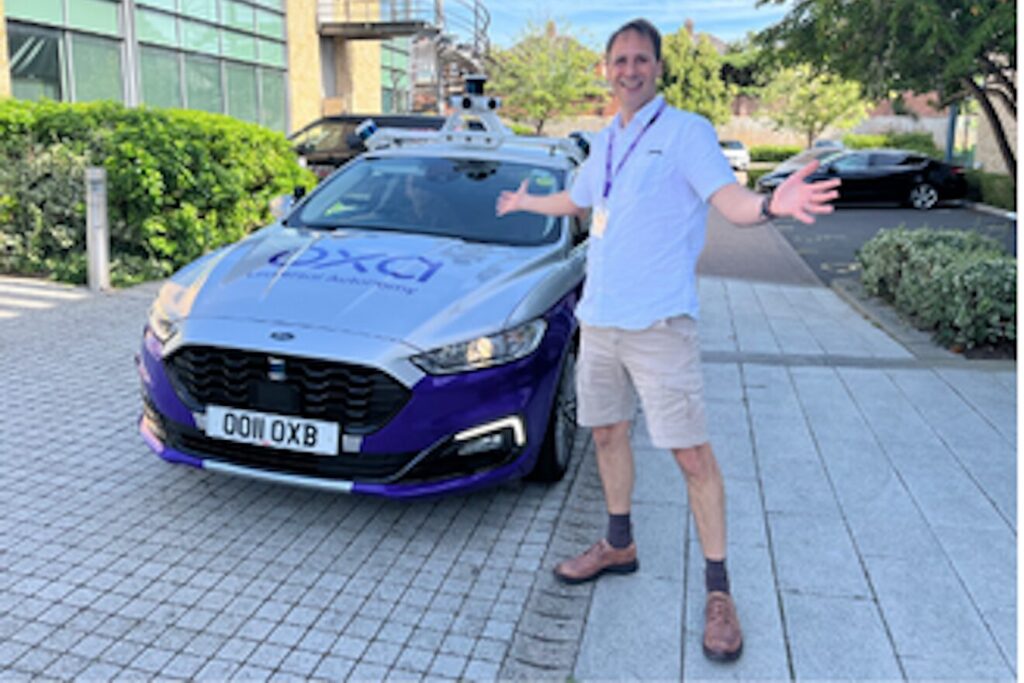
Oxa (previously Oxbotica) collaborates with Bradshaw Electric Vehicles, eVersum, Beep, Ford, Bayanat and NVIDIA. Oxa’s Professor Paul Newman CBE was named Industry Legend at the inaugural Self-Driving Industry Awards.
Ohmio won Vehicle of the Year at SDIA24 for its LIFT shuttle, offering demonstration rides in the car park at the Turner Contemporary in Margate.
Also in 2024, London-based Wayve raised $1.05bn from investors including Softbank, Nvidia and Microsoft. Alex Kendall of Wayve was named SDIA Person of the Year 2023. It has since announced partnerships on driverless taxis with Uber. In February 2026, Wayve announced US$1.2 billion in new funding, led by Eclipse, Balderton and SoftBank.
It has been suggested that self-driving will finally sever the link between private car ownership and access, simultaneously reducing congestion and increasing productivity.
Studies also indicate that widespread adoption of driverless taxis could free-up as much as 90% of current urban parking space, transforming city landscapes.
For many of us born last century, a car will be the second most expensive thing we buy, after our house. With our hearts ruling our heads, we dismiss the advice of oil baron Paul Getty – “If it appreciates, buy it. If it depreciates, lease it.” – for the love of a particular model.
However, within recent new car registration figures, there is a notable trend: the growth is driven by fleets, with private buyer registrations well down.
A 2023 McKinsey Mobility survey of 4,000 French, German and UK respondents found that 60% owned a car, while 80% had regular access to one – an important distinction, and demographics are at play.
As Doug Jenkins of AXA Insurance pointed out: “In my day, passing your test and getting your first car was all about mobility. Young people still want to get from A to B, but they want choices – they’re not so worried about ownership.”
When it comes to money, temporary car insurance provider, Cuvva, point out that the average car owner in Outer London will spend over £3,500 a year on running costs alone (insurance, fuel, MOT, tax and maintenance).
Given that 31% of London car owners apparently use their vehicle less than 10 times a month, in light of these figures, the case for car ownership suddenly looks somewhat shaky.
The cost of the self-driving cars and taxis, though, remains a significant consideration. The technology is currently very expensive. It is expected that self-driving will fundamentally change the insurance risk, with many less crashes, but repairs being much more expensive when they do happen.
Subjects we return to time and again include: Policy (legislation, standards and regulations); Confusion with ADAS such as adaptive cruise control and lane keeping assistance; Technology – hardware and software, vehicle-to-everything (V2X) connectivity, cybersecurity, physical AI and testing (real world and simulation); Business services like insurance and legal; and hot topics like crashes.
Artificial intelligence (AI) and machine learning (ML) are central to many ADS, powering the decision-making and perception capabilities.
These advanced technologies enable intelligent vehicles to interpret vast amounts of data from an array of sensors – cameras, radar, lidar and ultrasonic – detecting nearby vehicles, other road users and obstacles, and responding appropriately, even covering rare scenarios (edge cases).
Sensor fusion requires an acceptance that each sensor type has shortcomings. Cameras aren’t great in fog, GPS connections can be lost in tunnels, lidar and radar can both be susceptible to ‘phantom objects’. By efficiently processing data from multiple sensors, data fusion creates a more resilient system.
According to a 2025 report by Future Market Insights, the global sensor fusion market will more than quadruple from US$8.1 billion today to US$34.9 billion by 2035.
“By combining data from multiple sensors, sensor fusion enables improved perception, enhanced decision making, and greater system reliability compared to standalone sensor inputs,” the report stated, unequivocally.
To safely navigate complex environments, virtually all players in the self-driving cars space sign technology partnership agreements. From software and services engineering to simulated testing, welcome to the global automotive supply chain!
Companies that provide finished components or systems are known as Automotive Tier 1 Suppliers. Bosch is the largest. Others big players include Denso, Continental, Magna and Nvidia.
Detailing the importance of Vehicle-to-Everything (V2X) communications in road infrastructure, Robert Bateman, evolvAD Project Manager at Nissan Technical Centre Europe, said: “Another aspect was having infrastructure communicating with the car.
“Getting an input regarding a bus at a standstill around the next corner, our car changed lanes in readiness before anybody else even knew it was there. The car can work autonomously but Vehicle-to-Infrastructure (V2I) gives it a competitive edge.”
Vehicle-to-vehicle (V2V) communication is a key technology evolving alongside automation. Together, they deliver enhanced self-driving, enabling driverless cars and other autonomous vehicles to share critical information with each other and their surroundings in real-time.
By allowing vehicles to ‘talk’ to one another, V2V can feed into the decision-making of ADAS and ADS systems — helping to prevent crashes by providing out-of-sight information.
V2V communication enables the sharing of data about vehicle speed, position and direction, allowing a self-driving car to better anticipate and react to potential hazards — a car suddenly stopping ahead, or a pedestrian stepping into the road, for example.
Major motor manufacturers, including Mercedes, Nissan, Tesla and General Motors, are investing heavily in connected car systems as part of their push toward more highly automated vehicles.
The benefits of V2V extend beyond individual vehicles. By enabling driverless cars, trucks and buses to coordinate their movements, it can help to optimise traffic flow, reduce congestion, and improve road safety.
In cities like San Francisco, companies like Waymo are already using V2V to share information about blocked lanes, sudden braking, or changing traffic lights, in pursuit of smoother journeys.
In this country, the government is playing a crucial role in advancing V2V and self-driving. Cities like Milton Keynes are at the forefront of autonomous vehicle innovation, paving the way for safer, more efficient, and more reliable transport systems.
An important development in terms of international autonomous driving standards came in early 2026, when the United Nations (UNECE) published its proposed worldwide regulation.
The result of two years of consultations, key points in the Global Technical Regulation on ADS include:
· Safety Management System (SMS)
· Testing credibility
· Safety Case
· In-service monitoring & reporting (ISMR)
· Data Storage System for Automated Driving (DSSAD)
“Harmonized vehicle rules developed at UNECE are essential to avoid fragmented national approaches,” said UNECE exec secretary, Tatiana Molcean.
Not everyone is convinced though. Self-driving critic Michael DeKort said: “No one has seen ANY meaningful data by design from anyone.”
Improved safety is the main stated benefit of self-driving. Way back in 2017, in the excellent House of Lords Science and Technology Select Committee report, “Connected and Autonomous Vehicles: The Future?”, the Association of British Insurers (ABI) asserted that human error is a causal factor in 90-95% of road traffic accidents.
Self-driving cars eliminate such problematic human factors as fatigue, distraction, and impairment, in theory, dramatically reducing the accident rate.
The prize is huge as, according to the World Health Organization (WHO), approximately 1.2 million people die each year as a result of road traffic crashes – often pedestrians, cyclists and other vulnerable road users.
“Human drivers are distracted. They drink. They text. They take drugs. Autonomous vehicles do none of that,” said Bob Lutz, the former vice chair of General Motors.
By trusting the technology to take evasive action, self-driving could potentially save countless lives. Perfection is a lofty goal though, and highly automated systems may also introduce new risks, such as ‘phantom braking’.
It is generally agreed that the first person to die in a car driving itself was Joshua Brown in the US in 2016. The NHTSA investigated and concluded that his Tesla Model S in Autopilot had hit another vehicle with neither the assisted driving system nor the driver applying the brakes.
Public scepticism regarding self-driving cars persists following high-profile accidents affecting trust and adoption. In late 2025 in the US, there were reports of robotaxis running over both cats and dogs.
To promote self-driving cars, Waymo provides some compelling statistics: “92% fewer bodily injury claims and 88% fewer property damage claims over 25 million miles”.
Another major stated benefit is improved accessibility for people who can’t or shouldn’t drive. Gordon McCullough, CEO of the Research Institute for Disabled Consumers, describes this as “a huge trust issue”.
“Self-driving can clearly be a transformative technology for a lot of disabled people, particularly those who find public transport inaccessible or cannot drive,” he says.
There’s growing evidence, from San Francisco and in this country, that self-driving can reduce both fuel consumption and greenhouse gas emissions through optimised driving patterns.
At the UK government-backed Zenzic CAM Innovators’ Day 2025, Mike Looney of Caterpillar highlighted a study showing a 30% fuel saving for autonomous vehicles over human drivers.
According to the 2024 report “Driving the Future: Addressing Generational Trust and Ownership Barriers in the Adoption of Connected and Automated Vehicles”, based on a survey of 3,000 UK transport users, age is an important factor in autonomous driving trust and acceptance.
Responding to the question “Would you find sitting in traffic more enjoyable if you were able to concentrate on other things (e.g. work/entertainment)?”, the report found that the ‘no’ percentage increased with age – from 31% of Gen Z (born mid-1990s to early 2010s), up to 43% of Gen X (born mid-1960s to late 1970s), and rising sharply to 65% of Boomers (born mid-1940s to 1960s).
A subsequent question revealed a more complicated picture; Asking: “How comfortable are you with vehicles operating at L4 or L5?”, the researchers identified a wide range of views within each generation.
While trust in self-driving was found to be highest among those aged 30-39, with 8% “very comfortable” with the idea, this halves for those aged 18-29, less than the 5% recorded for the 50-59 age bracket.
To address this, the researchers developed “the SASS Model” – Sceptics, Alarmists, Swing Voters, and Supporters.
“The two middling groups, the sceptics and swing voters, are arguably most interesting,” explained report co-author Dr Clare Mutzenich. “Together, they represent more than a third of the target population.”
More recently, 2024 Self-Driving Industry Award winner Dr Mutzenich conducted research into emergency scenarios, including self-driving car passenger needs in the event of fire, flood or sickness.
Some concerns about driverless cars are not without foundation. In a series of experiments from 2013 onwards, Miller and Valasek showed that a hacker with wired or internet access to certain vehicles could disable the brakes, turn the steering wheel or cause acceleration.
While a malicious attack could have horrific consequences, Craig Smith, a security researcher who runs Car Hacking Village at Defcon, suggests that self-driving technology is generally secure.
“The interesting thing is that each sensor doesn’t trust the other,” he said. “It’s closer to the way humans figure out whether something is an illusion or not. That’s harder for a hacker to deal with.”
Taking a manual car off the road and replacing it with a self-driving one does little to solve the congestion problem. To do that, we need less cars, both parked and moving. The great hope for many in public transport, therefore, is fully automated buses.
A leading government-backed trial in this country is the Cambridge Connector project, which sees single-decker Alexander Dennis Enviro100AEV models running between Babraham Road Park & Ride and the university medical campus.
Remember when platooning HGVs were tipped as a great early use case? That hasn’t been achieved, not in the UK at least.
Backed by the Department for Transport and National Highways, the HelmUK project ran for five years. It concluded that, while platooning could deliver marginal fuel savings, merging with other vehicles at motorway junctions posed significant collision risks.
Beyond platooning, on the open roads of Texas, companies such as Aurora and Kodiak are pioneering hub-to-hub L4 trucking. Reported benefits include improved safety and reduced labour costs, in a sector which suffers from driver shortages.
Every year at the Self-Driving Industry Awards (SDIA), we at Cars Of The Future celebrate excellence in automated mobility, in the UK and internationally.
Our 2025 Vehicle of the Year award winner, the all-new Enviro100AEV by Alexander Dennis and Fusion Processing was parked outside the Turner Contemporary.
Professor Missy Cummings was crowned Person of the Year 2025 for highlighting the danger of over-reliance on camera-based vision for automation.
Also in 2025, our editor Neil Kennett was highly commended by The Guild of Motoring Writers (GOMW) for “Features that are valued by specialists, yet also interesting and easily accessible to non-specialists”. That’s what Cars Of The Future is all about.
Signup for free weekly self-driving news!