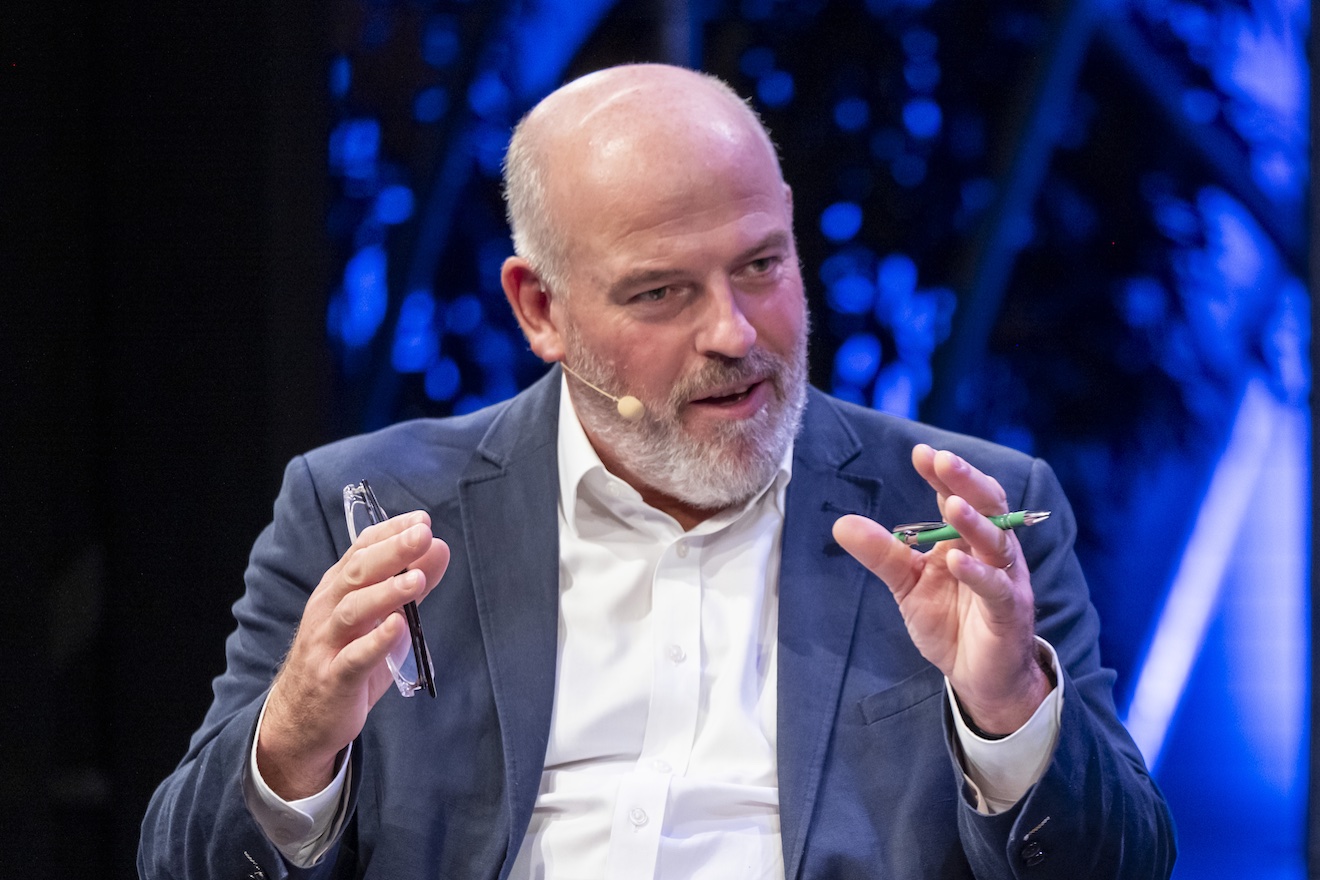
Niko Boeker, Director of Automotive Business Development at QNX, a division of BlackBerry, gives us the lowdown on Alloy Kore, the groundbreaking platform for SDVs, which won them our 2025 Self-Driving Industry Award for Software.
Q: What is ‘the siftware problem’?
NB: “In the corridors of automotive engineering, a somewhat derisive term has come to define the industry’s predicament: Siftware. It captures the state of modern vehicle development, where software integration is so fragmented and porous that critical elements like safety protocols and security patches slip through the gaps; where cobbling together disparate electronic control units (ECUs) takes precedence over innovation.
“The implications are far from metaphorical. They are measured in missed deadlines and hemorrhaging balance sheets. A Start of Production (SOP) delay is not just an inconvenience; it’s a fiscal nightmare. According to PwC analysis, a launch schedule that slips by 12 months can inflict losses of up to $200 million on an OEM, while suppliers face their own multi-million-dollar risks.
“Deloitte says that teams commonly pour up to 40% of their entire development budget into the resource drain of software integration. This friction turns what should be a seamless sprint into a slog, with development timelines often stretching beyond 40 months – a pace dangerously out of sync with consumer tech expectations.
“A 2025 QNX survey of automotive software developers and engineering VPs found that the complexity of integration is one of their biggest challenges. According to TTControl, establishing a process that meets ISO 26262 functional safety standards can demand over 5,000 hours of specialised labour. This is time that could have been much better spent building the features and end-user applications that drive customer loyalty and value.”
Q: Why do you describe Alloy Kore as ‘a paradigm shift’?
NB: “Alloy Kore is QNX and Vector’s bid to free the industry from the fragmentation trap. As the sector pivots aggressively toward SDV, the philosophy behind it is comparable to construction. Rather than asking architects to bake their own bricks and mix their own cement, the platform provides a pre-integrated, pre-validated substructure.
“By combining the safety-certified QNX operating system with Vector’s standardised middleware, the platform offers a ready-made baseline that complies with ISO 26262 up to ASIL D, and ISO 21434 security standards, right out of the box.
“It creates a standardised abstraction layer that supports a wide range of hardware targets, liberating OEMs from vendor lock-in and allowing them to switch silicon providers without tearing down their software stack.
“Moving to a unified platform offers benefits that ripple through the entire vehicle lifecycle. First, it enables a leaner vehicle. Because the OS and middleware are optimised to work in concert, rather than stitched together as an afterthought, the software requires less computational brute force. This allows automakers to achieve desired performance levels using less expensive hardware, directly cutting the Bill of Materials.
“Second, this strategy eliminates the inefficiencies of fragmented stacks and redundant ECU projects. Instead of treating every high-performance ECU as its own software island, OEMs can reuse a common validated platform across domains and models, freeing engineering capacity for innovation.”
Q: What does this mean for the automotive industry going forward?
NB: “Ultimately, the transition to a foundational platform represents a maturation of the automotive industry. It allows engineering leaders to stop functioning as crisis managers and return to their role as architects. The previous, fragmented era was perhaps an inevitable growing pain of the SDV revolution. With the arrival of foundational platforms, the industry finally has the tools to leave this behind.
“By trusting a verified platform to handle the complex, non-differentiating layers of the stack, automakers can redirect their best talent toward what truly matters: creating the unique, defining experiences that will drive the next wave of mobility.”