Providing self-driving news since 2019, Cars Of The Future is a trusted source on global and UK Waymo developments and insights. With Waymo now in London, here’s our take on the story to date.
This section features news and views on leading self-driving company Waymo’s autonomous vehicle operations, from US testing and early robotaxi services in Phoenix and Las Vegas, to worldwide expansion in global capitals, notably London.
Waymo is the autonomous vehicle company owned by Google’s parent, Alphabet. It operates the world’s largest robotaxi fleet, offering driverless rides in 11 US cities, as of mid-2026.
Waymo is now testing its self-driving cars in new cities, notably London ahead of a planned UK robotaxi launch as part of the Department for Transport’s new pilot scheme for autonomous ride-hailing.
This overview details the autonomous specialist’s history, technology, partnerships, regulatory progress, and expected launches – developments that matter because Waymo is shaping autonomous mobility.
Waymo’s roots can be traced back to the US Defense Advanced Research Projects Agency (DARPA) Grand Challenges of the mid-2000s. Alumni include Sebastian Thrun (who went on to co-found Google X, the “moonshot factory”), Chris Urmson (who went on to co-found self-driving freight company Aurora), and Dmitri Dolgov (co-chief executive officer of Waymo).
In January 2009, Google co-founders Larry Page and Sergey Brin quietly created Project Chauffeur. The challenge: get a car to drive itself along 100-mile California routes unassisted. They achieved this using a fleet of adapted Toyota Priuses – an impressive transportation first! Google went public with the news in October 2010, apparently after the New York Times got wind of it.
The next five years involved mainly unglamorous mileage-building. A Lexus RX450h joined the autonomous specialist’s fleet in 2012. In 2014 came “Firefly,” a purpose-built pod with no steering wheel or pedals.
A breakthrough arrived in October 2015, when Google gave Steve Mahan, who is legally blind, a solo ride through Austin, Texas – the first fully driverless trip on public roadways carrying a member of the public. By the year’s end, the project had logged over a million autonomous miles.
Alphabet’s creation in 2015 gave the project room to grow at arm’s length from Google’s core business and, in December 2016, it created “Waymo”, with the tagline “a new way forward in mobility.”
Adopting the Fiat Chrysler Pacifica minivan, by October 2017 Waymo was running driverless in Chandler, Arizona, albeit with an employee in the back.
Commercially, Waymo One officially launched in Phoenix in 2018. In October 2020, it achieved another notable first – taking paying passengers with nobody behind the wheel, in fact, no staff on board at all.
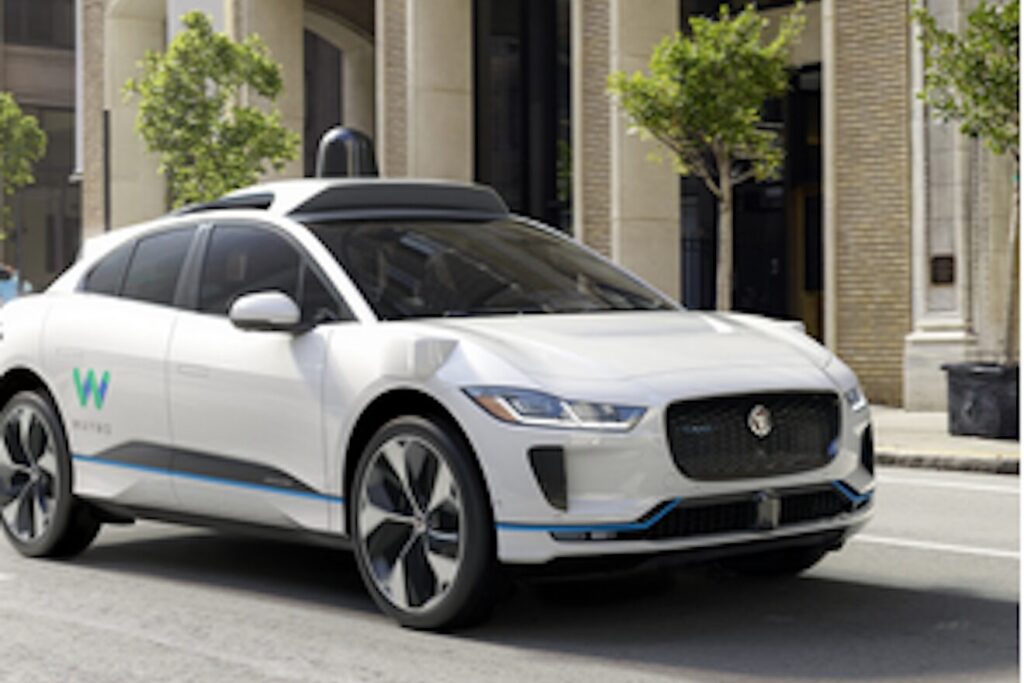
Already starting to build links in the UK, in 2018, Waymo partnered with Jaguar Land Rover (JLR), agreeing a deal for up to 20,000 electric I-PACE cars.
In late 2019, the autonomous specialist acquired Latent Logic, an Oxford University spin-out specialising in imitation-learning simulation technology.
In the US, Waymo was expanding its ride hailing service to cities including St. Louis, Pittsburgh, Baltimore, Philadelphia, and Minneapolis. Which country would be next?
It completed 14 million paid trips in 2025, up from 4.5 million in 2024. In December 2025 alone, it delivered over 450,000 paid rides per week.
That year, the autonomous specialist also hit the milestone of delivering 100 million fully autonomous miles on public roads. A 2025 report said the Waymo Driver saw 80-90% fewer crashes involving injuries or airbag deployments than human drivers.
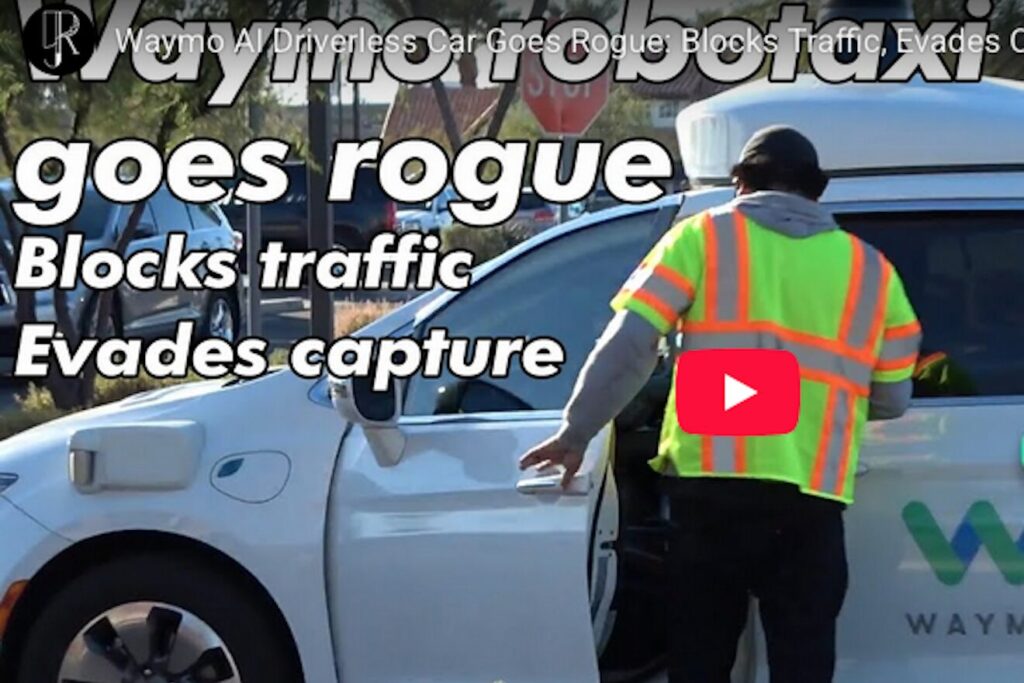
What incredible progress since our Self-Driving Industry Consumer Champion, YouTuber JJ Ricks, started filming rolling rides in Phoenix just seven years earlier, providing legendary content for the fast-growing online communities of self-driving enthusiasts.
A funding round in February 2026 valued Waymo at over $120 billion. Scale has naturally brought scrutiny, with US regulators investigating incidents of Waymo vehicles passing stopped school buses. Officials at the National Highway Traffic Safety Administration (NHTSA) launched an investigation and Waymo issued a recall for its 5th-gen system in late 2025.
Exploring new innovations, in 2025, Waymo partnered with DoorDash for autonomous deliveries to communities in Phoenix.
The self-driving car company also introduced new rolling stock, the Waymo Ojai – a battery electric robotaxi manufactured by Zeekr. It uses the 6th generation Waymo Driver system, boasting new 360-degree vision technology including updated sensors and a high-resolution 17-megapixel imager capable of capturing millions of data points.
In late 2025, Waymo confirmed plans to start self-driving operations on London’s public roadways – notoriously tricky infrastructure with heavy traffic – with Moove as fleet partner.
Manual mapping began in December, followed by an extensive period of testing using i-PACE vehicles with a safety driver behind the wheel.
Citizen videos showing Waymo vehicles navigating London’s complex narrow streets started to gain attention on social media.
In 2026, Waymo was focused on mapping roadways in Tokyo and New York City. It also has authorisation to offer fully autonomous rides at San José Mineta International Airport in Silicon Valley and San Francisco International Airport in the Bay Area. Will New Yorkers embrace them? That’s a key test. A short-term aim is to reach 1 million rides per week.
In the context of the sky-high life-taking cost of human-driven cars, Waymo has had relatively few collisions. One Waymo vehicle incident which did make headlines occurred in Echo Park, Los Angeles, in January 2026.
Surveillance footage apparently captured an Echo Park Waymo van hitting a street sign and then crashing into parked cars. The company claimed the Waymo vehicle was actually in manual driving mode, not operating autonomously, at the time.
When will Waymo launch in London? If not in 2026, then Waymo vehicles will almost certainly start taking passengers in 2027.
Is Waymo testing in the UK now? Yes. Waymo moved to supervised autonomous driving in spring 2026.
Who are Waymo’s main competitors in London? London-based Wayve, in partnership with transportation specialist Uber, and China’s Baidu, in partnership with Lyft, among others.
In 2024, Cars Of The Future presented Waymo with our prestigious Self-Driving Industry Award for Consumer Service. We look forward to covering whatever Waymo and Waymo vehicles do next, including London’s eagerly awaited ‘Chandler moment’.
Signup for free weekly self-driving news!